



Blog - All the posts
 ANSES bonus: everything you need to know about the $70,000 reinforcement and April 2026 payments
- by
cronywell
ANSES bonus: everything you need to know about the $70,000 reinforcement and April 2026 payments
- by
cronywell
🏦 SOCIAL SECURITY
ANSES bonus: everything you need to know about the $70,000 reinforcement and April 2026 payments
The National Social Security Administration (ANSES) confirmed the updated amounts for April 2026: minimum retirement of $380,319, extraordinary bonus of $70,000 and a single payment of up to $476,268 for adoption. Find out who is paid, when and how to process it.
📅 March 28, 2026 | ✍️ Journalistic writing | ⏱ Reading Time: 5 minutes
|
⚡ THE ESSENTIALS: 4 key takeaways from this article ▸ ANSES applies a 2.9% increase in April 2026 (February inflation, according to Decree 274/24). ▸ The minimum retirement rises to $380,319.31 and the $70,000 bonus brings the total to $450,319.31. ▸ The bonus is proportional for those who earn between the minimum and that ceiling; those who exceed $450,319 are excluded. ▸ The APU for adoption pays $476,268 for registered workers, monotributistas, AUH, unemployment and ART. |
📌 Context: why pensions increase in April
The April 2026 increase responds to the current pension mobility formula, established by Decree 274/24. This mechanism takes as a reference the Consumer Price Index (CPI) published by INDEC with a two-month lag and automatically transfers it to all assets – without the need for additional processing by the beneficiary.
INDEC reported that inflation in February 2026 stood at 2.9%, a figure that defines the adjustment applicable in April. Although this is a slowdown compared to previous periods, analysts warn that the purchasing power of retirees continues to be one of the main concerns, given that they allocate most of their income to health and basic products, items usually more inflationary than the general index.
With the 2.9% adjustment, the minimum guaranteed pension goes from $369,600.88 to $380,319.31, while the maximum retirement rises from $2,487,063.95 to $2,559,188.80.
💰 The $70,000 bonus: who gets paid and how much
ANSES confirmed the continuity of the extraordinary bonus of $70,000, a reinforcement focused on lower-income sectors within the pension system. Its distribution logic is staggered:
• Full bonus ($70,000): retirees and pensioners who receive the minimum salary ($380,319.31), bringing the total income to $450,319.31.
• Proportional bonus: those who receive an intermediate salary (greater than the minimum but less than $450,319.31) receive the complementary amount to reach that ceiling.
• Without bonus: beneficiaries with assets greater than $450,319.31, holders of special regimes or privilege pensions, and those who accumulate more than one asset that exceeds the limit.
The reinforcement is credited together with the monthly credit, without additional management. The follow-up can be done from the My ANSES platform (mi.anses.gob.ar) or the official app, by logging in with CUIL and Social Security Code.
📊 UPDATED AMOUNTS — ALL BENEFITS (APRIL 2026)
|
⭐ PERFORMANCE |
💰 BASE CREDIT |
💎 WITH BONUS |
|
Minimum retirement |
$380,319.31 |
$450,319.31 |
|
Maximum retirement |
$2,559,188.80 |
No bonus |
|
PUAM |
$304,255.44 |
$374,255.44 |
|
PNC Disability/Old Age |
$266,223.52 |
$336,223.52 |
|
PNC Mothers 7 children |
$380,319.31 |
$450,319.31 |
(*) The PUAM and the PNC also receive the $70,000 bonus. Those who receive the PUAM reach a total of $374,255.44.
👨 👩 👧 One-time payment of $476,268: the APU for adoption
Among the payments confirmed for April 2026, the Single Payment Allowance (APU) for adoption stands out, whose amount exceeds $476,000. This benefit is intended for a specific group and is paid only once, unlike the monthly bonus for retirees.
|
✅ Who can receive the APU for adoption? ▸ Workers in a relationship of dependency included in the SUAF. ▸ Monotributists. ▸ Holders of the Unemployment Fund (unemployment benefit). ▸ Beneficiaries of an Occupational Risk Insurer (ART). ▸ Holders of the AUH and/or Pregnancy Allowance (for social protection). |
The procedure must be initiated within two years of the court ruling of adoption and requires submitting: ID of the holder, birth certificate of the minor and the corresponding judicial documentation. It can be done online (mi.anses.gob.ar) or in person at an ANSES office with a prior appointment.
👶 AUH and Family Allowances in April 2026
The Universal Child Allowance (AUH) also received the 2.9% adjustment, raising its total amount to $136,666 per dependent child. However, the agency continues to apply the 20% withholding, crediting 80% monthly ($109,332.80). The withheld percentage is released once the AUH Booklet is presented, which certifies health, vaccination and school attendance controls.
An important point: according to Resolution 1170/2025, beneficiaries whose children up to 4 years of age have health checks automatically registered by the Ministry of Health will be able to collect 100% of the salary without the need to present the Booklet.
📊 AUH AND APU AMOUNTS — APRIL 2026
|
👶 CONCEPT |
APRIL 2026 AMOUNT |
|
AUH per child |
$136,666 (total) |
|
Direct monthly payment (80%) |
$109,332.80 |
|
Amount withheld (20%) |
$27,333.20 |
|
AUH with disability |
$445,003 |
|
APU by Adoption |
$476,268 (one-time) |
|
⚠️ AUH 2025 booklet: can it still be submitted? ▸ The original deadline to submit the AUH 2025 Passbook expired on March 31, 2026. ▸ Those who have not filed it on time may lose the 20% accumulated during 2025. ▸ It is recommended to check the status of the procedure in My ANSES or in the official app urgently. ▸ The deposit is credited within 60 days after the validation of the procedure. |
📅 ANSES Payment Schedule — April 2026
The collection schedule is organized according to the completion of the holder's DNI. Below are the dates for retirees, pensioners and beneficiaries of allowances:
🏛️ NON-CONTRIBUTORY PENSIONS (PNC)
|
🏛️ NON-CONTRIBUTORY PENSIONS (PNC) |
|
|
📅 COLLECTION DATE |
DNI ENDS IN |
|
Friday, April 10 |
0 and 1 |
|
Monday, April 13 |
2 and 3 |
|
Tuesday, April 14 |
4 and 5 |
|
Wednesday, April 15 |
6 and 7 |
|
Wednesday, April 15 |
8 and 9 |
💰 RETIREES WITH MINIMUM INCOME (UP TO 50,319.31)
|
💰 RETIREES WITH MINIMUM PENSION — up to 50,319.31 |
|
|
📅 COLLECTION DATE |
DNI ENDS IN |
|
Friday, April 10 |
0 |
|
Monday, April 13 |
1 |
|
Tuesday, April 14 |
2 |
|
Wednesday, April 15 |
3 |
|
Thursday, April 16 |
4 |
|
Friday, April 17 |
5 |
|
Monday, April 20 |
6 |
|
Tuesday, April 21 |
7 |
|
Wednesday, April 22 |
8 |
|
Thursday, April 23 |
9 |
📈 RETIREES WITH A SALARY HIGHER THAN THE MINIMUM
|
📈 RETIREES WITH A SALARY HIGHER THAN THE MINIMUM |
|
|
📅 COLLECTION DATE |
DNI ENDS IN |
|
Friday, April 24 |
0 and 1 |
|
Monday, April 27 |
2 and 3 |
|
Tuesday, April 28 |
4 and 5 |
|
Wednesday, April 29 |
6 and 7 |
|
Thursday, April 30 |
8 and 9 |
Source: ANSES. The amounts and dates can be consulted in mi.anses.gob.ar or by calling 130.
❓ Frequently Asked Questions (FAQs)
❓ Do I need to do any paperwork to collect the $70,000 bonus?
No. The bonus is automatically credited along with the monthly credit for those who qualify. It does not require any additional management by the beneficiary.
❓ What happens if I receive more than the minimum retirement but less than $450,319?
You will receive a proportional bonus that will complement your income until you reach the cap of $450,319.31. The calculation is carried out automatically by ANSES.
❓ How do I check how much I am going to get paid and on what date?
You can check the exact amount and the date of accreditation by entering mi.anses.gob.ar with your CUIL and Social Security Code. It is also available in the My ANSES app for iOS and Android.
❓ Does the AUH with disabilities also receive the 2.9% increase?
Yes. The AUH with disability amounts to $445,003, with a direct payment of 80% ($356,002.40) and withholding of 20% until presentation of the Passbook, except for children under 4 years of age with registered automatic controls.
❓ Is the $70,000 bonus updated for inflation?
No. The bond remains at $70,000 without updating for more than two years, which implies a real loss of purchasing power. Only the base salary is adjusted monthly by the mobility formula.
📝 Journalistic analysis
The April 2026 pension scheme consolidates a double mechanism: automatic monthly mobility for inflation for all assets and a fixed reinforcement focused on minimum income. The combination allows the most vulnerable retirees to receive $450,319.31, but the freezing of the bonus at $70,000 for two years eroded its real weight in the face of accumulated inflation.
The main question raised by specialists is whether the update of 2.9% – a reflection of slowing inflation – is enough to preserve the purchasing power of those who allocate most of their income to food and medicines. For the moment, the Executive gave no signs of modifying the scheme of the extraordinary bonus or extending it to new groups.
For AUH beneficiaries, the most urgent piece of information is the cut-off date for the 2025 Passbook: those who have not yet submitted it on time (deadline: March 31, 2026) must verify with ANSES if they can still recover the 20% withheld or if they need to start a claim process.
📚 Sources consulted
• ANSES (anses.gob.ar) — Resolution 55/2026 and Resolution 1170/2025
• INDEC — Consumer Price Index, February 2026 (CPI: 2.9%)
• Financial Area — Coverage of pension amounts April 2026
• El Cronista — APU Adoption Bonus and AUH Calendar
• Decree PEN 274/24 — Pension Mobility Formula
⚖️ This article is for informational purposes only. The final amounts and dates must be verified in anses.gob.ar or by calling 130.
 THE ADORNI SCANDAL
- by
cronywell
THE ADORNI SCANDAL
- by
cronywell
|
🔴 POLITICAL RESEARCH · NATIONAL GOVERNMENT · ARGENTINA THE ADORNI SCANDAL Flights on the presidential plane, an undeclared country and judicial complaints 📅 March 23, 2026 · Political Writing · Ongoing case |
|
⏱ Estimated reading time: 8–10 minutes |
⚖ Judicial status: ACTIVE CASES in Comodoro Py |
|
🏷 SEO · META TITLE (≤60 characters) Adorni scandal 2026: undeclared country, flights and legal complaints 📝 META DESCRIPTION (≤155 characters) Cabinet Chief Manuel Adorni faces criminal complaints for his wife's trip to New York in the Tango 01, a private flight to Punta del Este and an undeclared luxury house in the Indio Cuá country club in Exaltación de la Cruz. |
⚠ THE MOST DIFFICULT WEEK FOR THE CHIEF OF STAFF
In just ten days, Manuel Adorni, chief of staff of Javier Milei's government and former presidential spokesman, went from being the most visible official of the ruling party to becoming the epicenter of an unprecedented judicial and political storm within the libertarian space. The trigger was multiple: the trip of his wife Bettina Angeletti to New York aboard the presidential plane Tango 01, a private flight to Punta del Este valued at about 10,000 dollars, and the discovery of a two-story luxury house in the country Indio Cuá Golf Club, in the Buenos Aires district of Exaltación de la Cruz. which did not appear in his sworn statement of assets before the Anti-Corruption Office.
The case shook the government at a politically sensitive time. Unlike other previous controversies, this one involves an official of the maximum line of trust of the "sister" Karina Milei, and could not simply be neutralized with the usual denials of X. The force of the scandal forced the president himself to come out to publicly defend his chief of staff, while quietly, according to cabinet sources, some ministers mocked the "amateurism of the former spokesman."
📊 THE CASE IN NUMBERS
|
3 active cases in federal jurisdiction |
US$48,720 Declared savings, unchanged over 2 years |
US$150K Estimated value of undeclared property |
✈ CHAPTER 1: THE TRIP TO NEW YORK AND TANGO 01
It all began during the so-called "Argentina Week", the largest investment road show organized by Milei's government in Manhattan, with the aim of attracting international capital. Adorni himself, as part of the official entourage, traveled on the presidential plane Tango 01. What generated the controversy was that his wife Bettina Angeletti, an ontological coach without public office, was part of the delegation. According to the official himself in statements to A24: "I come for five days to get out of my way". Forty-eight hours later, he apologized publicly.
Angeletti's ticket cost was estimated at more than $5,000. National Deputy Marcela Pagano – a former member of La Libertad Avanza, today the Coherence bloc – filed a criminal complaint with Federal Court No. 11, which was registered as file CFP 1003/2026. The initial complaint focused on the possible misuse of state assets.
|
💬 THE PHRASE THAT SANK HIM "I've come for five days to go all out," Adorni said on A24 when justifying his wife's presence in the official entourage that traveled to New York on the presidential plane. 48 hours later, he published a public apology on social networks, something – according to related media – unthinkable in the style of the former spokesman. |
🛩 CHAPTER 2: THE PRIVATE FLIGHT TO PUNTA DEL ESTE
Before the controversy over New York died down, a second episode transcended. During the Carnival holidays, Adorni and his family traveled to Punta del Este, Uruguay, aboard a private jet valued at approximately $10,000. The destination was the Maldonado airport (Uruguay), and the cost was striking compared to the public salary of the official: according to official figures, in 2025 Adorni received about $2,800,000 per month, an amount that climbed to around $4,500,000 after the unfreezing of salaries in January 2026.
The calculation is eloquent: the cost of the air taxi to Punta del Este represents more than two monthly salaries of the chief of staff, valued in dollars. The question that began to circulate in the corridors of power and in the media was simple and direct: with what income is this lifestyle financed?
🏡 CHAPTER 3: THE UNDECLARED LUXURY HOUSE IN EXALTATION OF THE CROSS
The third and most serious chapter of the scandal broke out on March 19, 2026, when Pagano expanded his judicial complaint and incorporated a new element: a two-story house in lot 380 of the Country Indio Cuá Golf Club, located on Route 6, kilometer 173, in the Exaltación de la Cruz district. province of Buenos Aires, approximately 100 meters from the 17th hole of the golf course, which does not appear in any affidavit filed with the Anti-Corruption Office (OA).
The most conclusive evidence came through the newspaper La Nación: journalist Hugo Alconada Mon made public the response of the General Directorate of the Buenos Aires Property Registry to a request for cadastral information. The answer was unequivocal: Bettina Angeletti has been listed as the head of the country's Functional Unit 380 since November 15, 2024. The date is key: the property was acquired during Adorni's tenure as minister, and the last affidavit filed with the OA — dated August 4, 2025 — does not mention any property in Exaltación de la Cruz.
|
EVENT / DATE |
DESCRIPTION |
|
Country |
Indio Cuá Golf Club: 18 holes of golf, 14 tennis courts, 2 paddle courts, 3 soccer courts, equestrian sector, club house, gym, internal supermarket and computerized security. |
|
The property |
Two-story house, lot 380, located ~100 meters from the 17th hole. The entrance fee to the country is around 5 million pesos. |
|
Market value |
Between 129,000 and 249,000 dollars, according to estimates by Deputy Pagano based on similar properties in the private neighborhood. |
|
Expenses |
$699,637 pesos per month registered in the name of Bettina Angeletti. According to neighbors, 70% corresponds to security. |
|
Date of writing |
November 15, 2024, according to the Buenos Aires Property Registry, during the exercise of the position. |
|
At Adorni's DJ |
Only 50% of an apartment in CABA and 100% of another in La Plata received by donation. No real estate in Exaltación de la Cruz. |
|
⚖ PATRIMONIAL INCONSISTENCY — Pagano's complaint The deputy points out that Adorni's public income "is manifestly insufficient" to simultaneously finance: the previous rent in the same country, the construction of the house, the private flight to Punta del Este (~US$10,000), his wife's ticket to New York (~US$5,000) and monthly credit card expenses under investigation. All while his savings declared in dollars remained unchanged at US$48,720 during two years of public service. |
📁 CHAPTER 4: THE ACCUMULATING WHISTLEBLOWING NETWORK
The Adorni case is not limited to the three most visible episodes. An analysis of active court files reveals a map of alleged irregularities that exceeds travel and assets.
🚢 Training contracts with YPF's supplier shipping company: The shipping company Foggia – a supplier of YPF, a company whose board of directors Adorni has been a member of since January 2026 – would have hired the services of the consulting firm +BE, owned by Bettina Angeletti. The parties pointed out that the contracts with YPF have existed for 28 years, and that Adorni was appointed director later.
📱 Mass SMS tenders: Complaints from Pagano and Peronist Deputy Rodolfo Tailhade point to anomalies in tenders for the mass sending of messages from the Secretariat of Communication and the Secretariat of Innovation, which depend on Adorni. According to a source cited, the approval of these tenders responded to the need to execute 50 million dollars of credit from the IDB and the World Bank that were close to expiring.
🏢 Tecnópolis concession: The complaint also incorporates the tender for the Tecnópolis property, valued at 183,000 million pesos, under the orbit of the AABE – which depends on the Chief of Cabinet. Among the shortlisted companies would be DirecTV Argentina, linked to the Foggia Group, which could constitute another possible conflict of interest.
🗣 THE REACTIONS: DEFENSE, SILENCE AND CRITICISM
|
🛡 THE RULING PARTY DEFENDS ✅ Karina Milei: published in X her unconditional support for the official, spoke of "media garbage" and ended the controversy. ✅ Javier Milei: came out to deny versions of resignation, attacking the journalist who disseminated them. "Another filthy pen lying?" he tweeted. ✅ Santiago Caputo: he backed Adorni from his official account despite the fact that some sectors pointed to him as a possible author of a political operation. ✅ Lilia Lemoine: she downplayed the importance of the country: "It is a renovated house in a middle-class country. It's not a mansion on the island." |
⚠ CRITICAL VOICES 🔴 Marcela Pagano (Coherence): presented and expanded the criminal complaint. He described it as "illicit enrichment" and remarked that Adorni is a public accountant. 🔴 Patricia Bullrich (PRO): striking silence. He did not dedicate any personal posts to the scandal; he only reposted messages of support from the Milei brothers. 🔴 Rodolfo Tailhade (UP): co-filed a complaint for the SMS tenders and expanded the judicial scope of the case. 🔴 Sector of the cabinet itself: anonymous sources described the episode as pure "amateurism" of the former spokesman and admitted internal discomfort. |
📅 CHRONOLOGY: HOW THE SCANDAL BROKE OUT
|
EVENT / DATE |
DESCRIPTION |
|
Feb 2026 |
Carnival: Adorni and his family fly by private jet to Punta del Este. The cost of the transfer (~US$10,000) does not match his public salary. |
|
Mar 10–11, 2026 |
"Argentina Week" in New York. It is leaked that Bettina Angeletti traveled in the Tango 01 with the official entourage despite not being an official. |
|
Mar 11, 2026 |
Adorni admits to A24: "I've come for five days to get off my back." The phrase generates immediate repercussions in networks and media. |
|
Mar 13, 2026 |
Adorni publishes public apology in X. Karina Milei supports him and speaks of "media garbage". |
|
Mar 16, 2026 |
Pagano files a criminal complaint in Federal Court No. 11 (Expte. CFP 1003/2026) for the trip to New York. |
|
Mar 19, 2026 |
Pagano expands the complaint: he incorporates the property in the country Indio Cuá, without declaring before the OA. |
|
Mar 19, 2026 |
Milei denies versions of Adorni's resignation. Adorni publishes: "Fake". The president attacks the journalist who published the version. |
|
Mar 20, 2026 |
La Nación publishes response from the Property Registry: Angeletti has been listed as the owner of lot 380 since 11/15/2024. |
|
Mar 23, 2026 |
The case is still active. Multiple files are being processed in Comodoro Py. The government maintains public shielding on Adorni. |
👤 PROFILE: WHO IS MANUEL ADORNI
Manuel Adorni was born in 1979 and is a public accountant. Before entering the government of Javier Milei, he worked as an economist and communicator, with regular appearances on news channels. His direct and confrontational style made him one of the most recognizable spokesmen in Argentina. In January 2026, Milei promoted him to chief of staff — a position he already held — and added the presidency of the YPF board of directors.
According to his affidavit filed with the Anti-Corruption Office in August 2025, Adorni declared a net worth consisting of: $2,500,000 in pesos, more than US$48,720 in dollars, an apartment in CABA (50%) and an apartment in La Plata (100%, received by donation). No property in Exaltación de la Cruz.
|
📌 THE POLITICAL KNOT — What is at stake? Beyond the legal cases, the Adorni case puts in tension one of the founding values that the Milei alliance used to win the 2023 elections: the denunciation of the political "caste" and its lifestyle supposedly distant from the common citizen. The paradox of an official who preaches austerity and accompanies presidential plane trips with his wife, flies to Punta del Este in a private jet and builds a house in a high-end golf country does not go unnoticed by public opinion or by the opposition. |
⚖ LEGAL CONTEXT: THE CAUSES AND THEIR SCOPE
The complaints filed with the federal jurisdiction of Comodoro Py potentially involve three figures of the Argentine Penal Code: illicit enrichment of a public official (art. 268.2), breach of the duties of a public official (art. 248) and possible irregularities in tenders. The figure of illicit enrichment requires demonstrating that the increase in assets is not justifiable by the legitimate income of the official. In this sense, the comparison between Adorni's official salary and documented expenses – real estate, flights, expenses – is the central axis of the judicial investigation.
The judicial investigation is in the initial stage and Adorni has not been formally charged. The Federal Court can order evidentiary measures – consultation of the Property Registry, review of account statements, analysis of affidavits – before moving towards an eventual summons.
✍ FINAL ANALYSIS: THE MYTH OF AUSTERITY AND ITS CRACKS
The Adorni scandal is not just the story of an official facing legal complaints. It is, in a broader sense, a stress test for the central discourse of the libertarian movement: the idea that its representatives are different, more austere, and more transparent than traditional politicians.
The combination of a presidential plane used to transport the spouse without official charge, a charter flight to a luxury resort and a property in a golf country that does not appear in the affidavit is exactly the type of episode that Adorni himself – as presidential spokesman – would have capitalized on to attack the Kirchnerist or Macrista "caste".
The official defense was quick and forceful. But shielding Adorni has political costs that the government credibly pays. And in a context of adjustment, tariff hikes and salaries that have not yet recovered pre-inflation purchasing power, the image of a Cabinet chief building a house in a country with an 18-hole golf course is not exactly the postcard that the libertarian government needs to show.
The case is still open. The files are advancing in Comodoro Py. And the question surrounding the "lopsided" Adorni is no longer only judicial: it is profoundly political.
|
🔍 SEO KEYWORDS — Target density: 1.7% Manuel Adorni scandal · Undeclared country adorni · Adorni illicit enrichment · Adorni Exaltation of the Cross · Adorni New York plane · Adorni Punta del Este Private Jet · Indio Cuá Golf Club · Bettina Angeletti · Marcela Pagano denounces Adorni · Adorni affidavit · Chief of Staff Argentina 2026 · Milei government: scandal |
|
📚 SOURCES CONSULTED 🔗 Infobae: "Red circle: the Adorni case, from enthusiasm in New York to anguish in Buenos Aires" — 15/03/2026 🔗 Profile: "Manuel Adorni is awarded a house in a country house in Exaltación de la Cruz" — 19/03/2026 🔗 La Política Online: "They reveal that Adorni built himself a house in a luxurious country" — 19/03/2026 🔗 El Diario AR: "Pagano expanded complaint for illicit enrichment" — 19/03/2026 🔗 Latin American Roundup: "Suspicions multiply about Adorni's heritage" — 03/20/2026 🔗 Minuto Uno: "How much is the luxury house that Adorni would have in a Premium country house valued" — 03/19/2026 |
 Retirement that is not enough
- by
cronywell
Retirement that is not enough
- by
cronywell
PENSION CRISIS | UPDATED DATA FEBRUARY 2026
Retirement that is not enough: in February 2026 the minimum pension is below the individual poverty line
With $429,254 of minimum retirement with bonus and a Total Individual Basic Basket of $452,321 according to the INDEC of February 2026, older adults face a monthly deficit of $23,000. Between 17.1% and 34.7% of those over 60 years of age continue to work out of necessity, a trend that accumulates 25 years of real deterioration with no structural solution in sight.
✍️ Social 📅 Journalism Newsroom March 18, 2026 🏷️ #JubilaciónMínima2026 #ANSES #CrisisPrevisional #AdultosMayores #Argentina
|
⏱️ READING TIME 7 minutes |
📅 March 2026 Updated data |
📊 Approx. 1,400 words Level: General / Informational |
|
🔍 META DESCRIPTION SEO In February 2026, the minimum retirement in Argentina is $429,254 with a bonus, compared to an individual Total Basic Basket of $452,321 (INDEC). Between 17.1% and 34.7% of those over 60 years of age continue to work out of necessity, according to data from INDEC 2025 and estimated 2026. A historic deterioration that has spanned five governments. Keywords: minimum retirement February 2026 Argentina | ANSES amounts 2026 | Retirees Working Need | INDEC 2026 Basic Basket | Purchasing Power Retirees | older adults poverty Argentina | DNU 274/2024 retirement mobility |
BUENOS AIRES, MARCH 18, 2026 — Every February, the same humiliating calculation is repeated. Older adults who receive the minimum pension receive $429,254 pesos from ANSES. The National Institute of Statistics and Census (INDEC) certifies that, in order not to be considered poor, an individual needs at least $452,321 per month. The difference: $23,000 that separates the pension guaranteed by the State from the poverty threshold measured by the State itself. A deficit that millions of retirees are trying to cover with their bodies, returning to the labour market.
💰 How much do retirees receive in February 2026: the official ANSES amounts
Through resolution 21/2026 published in the Official Gazette, the National Social Security Administration (ANSES) made official the 2.85% increase in all pension benefits for February, in line with the Consumer Price Index (CPI) for December 2025 published by INDEC. The update follows the mechanism established by the Decree of Necessity and Urgency (DNU) 274/2024, which replaced the quarterly adjustment system with a monthly mobility scheme tied exclusively to past inflation.
|
Rendering (Feb. 2026) |
No Bonus |
ANSES Bonus |
With Bonus |
|
Minimum Retirement Agreement (SIPA) |
MX$359,254 |
$70,000 |
MX$429,254 |
|
Maximum Retirement (SIPA) |
$2,417,441 |
— |
$2,417,441 |
|
Universal Basic Benefit (PBU) |
MX$164,342 |
$70,000* |
$234,342* |
|
Universal Pension for the Elderly (PUAM) |
MX$287,403 |
$70,000 |
$357,403 |
|
Non-contributory pension (disability/old age) |
MX$251,453 |
$70,000 |
$321,453 |
|
AUH per child |
MX$129,082 |
— |
MX$129,082 |
(*) The extraordinary bonus of $70,000 is granted to those who receive salaries up to $369,600. For assets between that value and $439,690, it is paid proportionally. It has not been updated since March 2024. Source: ANSES Resolution 21/2026 and Decree 109/2026.
|
🚨 ALERT: THE MINIMUM RETIREMENT IS BELOW THE INDIVIDUAL POVERTY LINE (Feb. 2026) Minimum Retirement WITH BONUS (ANSES, Feb. 2026): $429,254 Basic basket Total adult equivalent (INDEC, Feb. 2026): $452,321 MONTHLY DEFICIT: -$23,067 The retiree who receives the minimum is, technically, POOR according to the State's own data. Source: ANSES Res. 21/2026 | INDEC Basic Basket Valuation Feb. 2026 |
👷 ≈34.7% of those over 60 are still working: the human face of statistics
The data comes from the statistical dossier published by INDEC based on the Permanent Household Survey (EPH) of the first quarter of 2025 and a private survey on the first quarter of 2026: 34.7% of people of retirement age – between 60 and 74 years old – are still active in the labor market. The vast majority do so out of economic necessity. according to the Colsacor Foundation report that raised the alarm in 2024, 83% of older adults who work do so driven by the insufficiency of the pension fund, not by vocation or desire to stay active.
Of the approximately 4.5 million retirees who received the minimum pension (including bonuses) in September 2025, a significant proportion do not have family support or accumulated savings. For them, the equation is straightforward: the pension is not enough to feed themselves, access medicines and pay for services. The solution – forced, informal and without legal protection – is to go back to work.
|
|
"The Minimum Retirement with bonus for February 2026 is 7.1% below November 2023, and 3.6% lower than February 2025." — Chequeado.com, Verification of pension data, January 2026 |
📉 25 years of deterioration: the picture that no government wants to show
The deterioration of the purchasing power of pensions is not a novelty of the current administration. It is a structural trend that crosses five governments, three different mobility formulas and a single result: older adults are losing more and more purchasing power in the face of inflation. The following table summarizes the real evolution of the Minimum Retirement by presidential term, at constant values (August 2024 pesos, according to data from the Eforo Foundation and the CEPA Center):
|
Period |
Management |
Jubilee. Min. (actual value*) |
Inflation acum. |
Var. real |
|
2011-2015 |
Fernández de K. |
$421,846 const. |
177% |
+21% |
|
2016-2019 |
Macri |
$330,509 const. |
295% |
-22% |
|
2020-2023 |
A. Fernández |
$216,778 const. |
690% |
-9% |
|
Jan-Dec 2024 |
Milei (1st year) |
Min. History |
117,8% |
-13,6% |
|
Feb 2026 |
Milei (current) |
$429,254 w/bond |
33.1% per year |
-7.1% vs 2023 |
(*) Values in constant pesos for August 2024. Sources: Eforo Foundation, CEPA Center, Chequeado.com, INDEC. The real variation considers INDEC CPI inflation by period. The $70,000 bonus was frozen since March 2024 without an update.
⚖️ DNU 274/2024 and the paradox of the adjustment for inflation
Since April 2024, the current retirement mobility formula – established by President Milei's DNU 274/2024 – adjusts pensions monthly according to the inflation of the month prior to the previous one (i.e., with a two-month lag). This implies that pensions, at most, will be able to maintain their purchasing power constant, but never recover the lost ground. The CEPA Center's analysis concludes that, under this formula, retirees will not be able to improve their purchasing power in the long term.
Added to this is the freezing of the extraordinary bonus: set at $70,000 since March 2024, this supplement did not receive any update during the following 24 months. The effect is that those who earn the minimum wage – the most vulnerable segment – are the ones who lose the most relative purchasing power, since the bonus represents an increasingly smaller fraction of the total income as inflation advances.
|
💊 THE DRUG CRISIS: THE LEAST MENTIONED FACT PAMI's basket of medicines increased 361.6% from December 2023 to January 2025 (CEPA Center). That is equivalent to 191.7 percentage points above the increase in the Minimum Retirement with bonus in the same period. 38% of working older adults reported having postponed the purchase of medicines or medical consultations (Colsacor 2024). In 2025, PAMI reduced the number of medicines covered to 100% and tightens the criteria for accessing free medicines. |
🌎 In context: Argentina doubles the regional rate of older adults working out of necessity
ECLAC places the proportion of older adults who work out of economic necessity at around 8-10% in countries with more stable pension systems in the region, such as Chile, Uruguay and Brazil. Argentina, with its 17.1% (First quarter 2024 and current estimate 34.7% doubles or triples that average. The difference does not lie in the age of the population or in its demographic structure, but in the historical inability of the system to preserve the real value of the contributions in the face of recurrent inflationary cycles.
|
|
"In 2024, 19.2% of the adjustment in State spending was explained by the loss of purchasing power of retirements and pensions. The fiscal surplus was built, in part, at the expense of retirees." — Center for Argentine Political Economy (CEPA), Pension Mobility Report, 2025 |
💡 What is being debated: the possible reforms and their limitations
Congress tried in 2024 to sanction a new mobility formula that would contemplate a real improvement in salaries. The project, approved with the support of the opposition, was totally vetoed by the national Executive Branch. The Supreme Court of Justice has a series of cases pending resolution in which retirees claim the recomposition of historically liquefied assets. Among specialists, there is consensus on the necessary reforms, although not on their financing:
• Update of the extraordinary bonus: the $70,000 bonus frozen since March 2024 should be updated at least by CPI so as not to lose its compensatory effect on the lowest assets.
• Formula with a salary component: a mobility that combines CPI with the evolution of wages (RIPTE) would allow retirees to participate in economic growth, not just survive inflation.
• Basket of the elderly as a floor: define the Minimum Retirement based on the real cost of living of the elderly (including medicines, health and differential food) instead of based on the general CBT.
• Labor formalization: reducing labor informality, which exceeds 40% of the active force, is a necessary condition for the system to have a sufficient contributory base in the long term.
|
🔎 JOURNALISTIC CONCLUSION The February 2026 Minimum Retirement with bonus ($429,254) is not enough to cover the Total Individual Basic Basket certified by INDEC ($452,321). In real terms, it is 7.1% below the value of November 2023. The Argentine worker who contributed all his life reaches old age with an income that technically places him in a situation of poverty. While the State continues to postpone a structural pension reform, it is the elderly who pay the cost of the adjustment with their own bodies. |
🏷️ SEO TAGS: Minimum Retirement February 2026 | ANSES updated assets | retirees working Argentina 2026 | INDEC 2026 Basic Basket | Purchasing Power Retirees | DNU 274/2024 | Retirement Bonus 2026 | Older Adults Poverty | pension reform Argentina | Pension crisis
📌 SOURCES: ANSES Resolution 21/2026 | INDEC Basic Basket Valuation Feb. 2026 | INDEC Permanent Household Survey Q1 2025 | Colsacor Foundation Report 2024 | Chequeado.com Pension Series | CEPA Center Social Security Mobility 2025 | Eforo Foundation evolution of assets 2024 | IMSS Argentina.gob.ar March 2026 | Infobae.com / Cronista.com / Ambito.com updated data 2026.
Why does it hurt us to be taken against us?
- by
cronywell
Why Does It Hurt When Someone Disagrees With Us?
What happens in your brain when someone doesn't think like you
Disagreement activates brain systems designed to detect conflict and maintain internal coherence. Neuroscience explains why hearing a contrary opinion can feel like a real threat — and what we can do to respond with greater calm and openness.
 When we hear a contrary opinion, the brain activates regions linked to pain processing and threat detection.
Hearing an opinion that contradicts our own is rarely a neutral experience. Although we often attribute this difficulty to cultural factors or personality traits, neuroscience shows it has far deeper roots — they are written into the basic workings of our brain.
For decades, research in cognitive and social neuroscience has been uncovering the mechanisms behind that familiar discomfort: the knot in your stomach, the urge to respond, the feeling that a conversation has turned into a battlefield. Understanding what happens in the brain during disagreement is not merely an intellectual exercise — it is the first step toward developing a skill that is increasingly valuable in the 21st century: the ability to truly listen.
The brain detects conflict before it reasons
When we hear an idea that contradicts how we think, the brain does not start by evaluating arguments. It first detects that a conflict exists. This happens in milliseconds — before we are even consciously aware of it.
One of the central regions in this process is the anterior cingulate cortex (ACC), a structure located in the midline of the brain. The ACC acts as a sophisticated radar, identifying inconsistencies between our expectations and reality, as well as conflicts between responses or beliefs. Once that alarm signal fires, the rest of the brain enters high-alert mode.
What is most revealing — and what explains why disagreement can feel physically uncomfortable — is that the ACC is part of circuits involved in both cognitive control and the processing of physical pain and social pain. In other words, a contrary opinion can activate the same systems that process harm or exclusion. This is not a metaphor: it is neurobiology.
 Understanding how the brain works is the first step toward learning to regulate it in the face of disagreement.
Alongside the ACC, the amygdala — the brain's emotional alarm center — activates in response to what it perceives as a threat, even when that threat is symbolic or ideological. The insula, in turn, translates that alert into concrete bodily sensations: chest discomfort, muscle tension, a diffuse sense of unease.
The result is familiar to all of us: a knot in the stomach, physical rigidity, and an instinctive urge to defend ourselves or shut down the conversation. Finally, the dorsolateral prefrontal cortex — the brain's executive region — enters the picture. Under optimal conditions, it can regulate those automatic responses and guide a more thoughtful reply. The difficulty is that this requires cognitive resources that are not always available.
The cognitive and emotional cost of integrating another perspective
Accepting a view that opposes our own demands considerable effort. The brain must simultaneously hold two incompatible mental models: what I believe and what you are saying. It must then compare them, evaluate their validity, and decide whether either needs to be revised. From an energetic and cognitive standpoint, this is a demanding operation.
On top of this effort comes a well-documented mechanism: cognitive dissonance. When new information threatens the coherence of our worldview — or our identity — the brain experiences internal tension that it seeks to resolve. In many cases, that tension is not resolved by listening to the other person or revisiting our own ideas, but by justifying and reinforcing what we already believed. Researchers call this motivated reasoning: we are not searching for truth; we are searching for confirmation.
There is also a social dimension that amplifies these mechanisms. Many of our beliefs are not merely abstract ideas — they are deeply tied to group belonging, collective identity, and our sense of who we are. Changing perspective can be experienced — even unconsciously — as a social risk: losing status within the group, looking bad, or being perceived as someone who has betrayed their values. The social brain is especially wired to avoid those kinds of threats.
 Changing perspective can feel like a social risk: many beliefs are tied to a sense of group belonging.
This combination of factors — the cognitive cost of holding two mental models, the threat to identity, and the risk of social exclusion — explains why disagreement can be so strongly resisted, even by people who genuinely value listening and dialogue. This is not about bad intentions: it is about biology.
Stress as an invisible obstacle
A critical and frequently underestimated factor is stress. When physiological arousal is elevated or prolonged, the autonomic nervous system enters defense mode. In that state, the prefrontal cortex — the region that allows us to reason, regulate emotions, and take perspective — loses effectiveness. Its activity decreases, and more automatic, reactive systems take over.
The outcome is predictable: under high emotional load or chronic stress, listening becomes especially difficult. Not because a person is less intelligent or less empathetic, but because the brain resources that make active listening possible are temporarily compromised. It is an adaptive response to perceived threat — though in everyday conversation, it tends to be counterproductive.
 Stress activates the nervous system's alert mode, making it harder to listen with calm and openness.
Neuroplasticity: listening can be trained
The good news is that these systems are plastic. The brain regions involved in conflict, emotion, and executive control change with experience and deliberate practice. Neuroplasticity — the brain's capacity to reorganize itself in response to learning — opens a concrete window of possibility.
Practices such as mindfulness and biofeedback have been shown to reduce automatic reactivity and increase the ability to observe disagreement without responding impulsively. Studies on resting-state brain networks show that sustained meditation practice modulates circuits involved in emotional regulation and cognitive flexibility, fostering more adaptive responses to disagreement.
Research from the Neuroscience of Well-being group at the University of Seville provided evidence along the same lines: training physiological and emotional regulation is associated with a greater capacity to pause before responding, listen with less reactivity, and navigate difficult conversations with more clarity and lower emotional cost.
Polarization, technology, and the challenge of the 21st century
The difficulty of listening to contrary opinions has taken on a new dimension in the context of digital societies. Social media algorithms are designed to maximize emotional engagement — which in practice means amplifying content that triggers threat responses, outrage, and in-group belonging. The result is an information ecosystem that reinforces cognitive dissonance at a massive scale, making genuine encounters with different perspectives increasingly difficult.
In this context, the capacity to listen to opposing views becomes more than an interpersonal skill: it is an essential civic competence. Understanding that discomfort in the face of disagreement is a universal brain response — not a character flaw — may be the first step toward approaching it with more awareness and less judgment.
In an increasingly polarized world, the ability to listen is also an act of resistance: resistance to the automatic mechanisms that trap us in cognitive bubbles and distance us from one another. A skill that, as neuroscience shows, we can all cultivate.
 What is critical thinking?
- by
cronywell
What is critical thinking?
- by
cronywell
|
🧠 CRITICAL THINKING Thinking, Choosing, Deciding: The Art of Inhabiting the Truth E N S A Y O F I L O S Ó F I C O |
|
✒ PHILOSOPHICAL-JOURNALISTIC ESSAY | Ideas & Thought Writing |
⏱ Reading time: ~11 min |
|
◆ To think critically is not to distrust everything, but to learn to choose and decide when the world is filled with competing stories to be true. Choosing and deciding are, at first glance, the most common verbs in the language. We use them every day without seeing beyond their apparent function. But if we open them, if we extract the etymology and put them in the light of philosophy and ethics, we discover that they are the deepest articulation between thought, freedom and morality. This essay proposes a journey: from the origins of critical thinking in Socratic Greece to the engine room of digital post-truth; from the distinction between ethics and morality to the question that returns like a philosophical boomerang: are choosing and deciding the articulation that is needed between the two? |
🏛️ I. The Origin: Socrates and the Scandal of Asking
There is an image that sums up, better than any definition, the birth of critical thinking: a man in the public square of Athens, barefoot, asking questions.
That man is Socrates (470-399 B.C.), and his crime was the most subversive of all that a society can imagine: to make people think for themselves. His method, maieutics – from the Greek mayéin, 'to give birth' – did not offer answers but shed light on the contradictions hidden in the certainties of others. With a finely calculated irony, Socrates feigned ignorance in order to lead the interlocutor to examine his own assumptions. And when he discovered that these assumptions were fragile, the interlocutor was faced with the only philosophical task that matters: to think again.
The Socratic gesture is, in essence, the first historical formulation of critical thought: not the denial of all truth, but the demand that every statement be examined. As Plato summed it up in the Phaedo, the unexamined life is not worth living.
It is worth stopping here. Socrates emerged in Athens during a deep political and cultural crisis. The Sophists – his contemporaries – had popularized relativism: if everything is a matter of perspective, if there are no universal truths, then any argument has the same value as its opposite. Socrates rejected this nihilism not from authority, but from method. He didn't say 'I know'; it said 'let's examine together'. That attitude is still today the most accurate figure of critical thinking.
|
|
"Critical thinking is having the desire to seek, the patience to doubt, the fondness to meditate, the slowness to affirm, the disposition to consider, the care to put in order and the hatred for all kinds of imposture." — Francis Bacon, Advancement of Learning, 1605 |
|
The philosopher Max Black would be the one who, in his 1946 book on logic, would use the term 'critical thinking' in a systematic and academic way – the paternity of the modern concept is attributed to him. But the practice already existed, in Socratic maieutics, in Platonic dialectics, and in Aristotelian rhetoric, centuries before anyone named it by that title.
Aristotle would add a crucial dimension to the Socratic project: phronesis, practical judgment, the wisdom that allows us to deliberate well about what we should do. For Aristotle, critical thinking is not an abstract exercise but the necessary prelude to ethical action. Here appears for the first time the link that this essay proposes to explore: critical thinking as a bridge between knowledge and moral decision.
🔤 II. The Words That Hide a World: Choosing and Deciding
Choosing and deciding may seem, by all accounts, to be a couple of the most common verbs. We use them every day and hardly see anything beyond themselves than their own function.
But etymology—that archaeology of language—reveals something unexpected to us. The word decide comes from the Latin decidere: 'to resolve' and, more literally, 'to cut'. Whoever decides cuts the ambiguity. It puts an end to the suspension of judgment and commits its its will to a path. It is not a minor act: it is the moment when reflection ceases and action begins. As the RAE defines it, deciding is 'forming the purpose of doing something, or making a choice, after reflection on something'. The cut is the result of thinking.
Choosing comes from the Latin eligere: 'deliberation and freedom to act'. The RAE complements it: 'to choose or prefer someone or something for a purpose'. Here appears a dimension that does not have such an explicit decision: freedom. Choosing presupposes real options, it implies the awareness that there is more than one possible path. Those who choose not only act: they recognize their condition of being free.
Together, choosing and deciding draw the complete map of the human act: free deliberation (choice) that becomes commitment (decision). And that map, drawn with precision, leads us to a question of great philosophical importance that critical thought cannot avoid: if choosing implies freedom and deciding implies cutting, what is the basis of both? In reason, in duty, in the common good? That is: in ethics or in morality?
|
📖 Etymology and Meaning: the key verbs of the critical act |
|
|
Decide |
From Latin decidere: 'to cut'. Resolve after reflection. Committing the will to an action. |
|
Choose |
From Latin eligere: 'deliberation and freedom to act'. Choose with awareness of the available options. |
|
Critical |
From the Greek krinein: 'to separate', 'to judge', 'to discern'. Those who think critically separate the true from the false. |
|
Mayeutics |
From the Greek mayéin: 'to give birth'. The Socratic method that illuminates knowledge through questions. |
|
Phrónesis |
From Greek: prudence or practical wisdom. For Aristotle, the virtue of deliberating well about action. |
|
Post-truth |
Context in which the influence of objective facts is less than that of personal emotions and beliefs. |
⚖️ III. Ethics and Morals: The Articulation That Is Needed
Decision and choice: are they the articulation that is needed between ethics and morality? The question is so dense that it is convenient to start by undoing a frequent confusion.
In everyday speech, ethics and morality are used synonymously. In the philosophical realm, however, distinction matters. Ethics – from the Greek ethos, 'way of being' or 'character' – is the philosophical discipline that reflects on the principles that should govern human conduct; Analyze the rational foundations of right and wrong, look for principles that guide action beyond custom or authority. Morality – from the Latin mos, moris, 'custom' – is the set of norms, values and conventions that a particular society considers correct or acceptable; it is constructed, transmitted and socially reproduced.
In other words: ethics reflects; morality regulates. Ethics questions the rules from reason; morality lives them from habit. A society can declare 'moral' a practice that ethics, when examined rationally, condemns. Human history is full of these gaps. As the philosopher Gustavo Bueno points out, ethics refers to the behavior derived from the individual's own character, while morality refers to the customs that regulate the behavior of the individual as a member of a social group. One emanates from within; the other comes from outside.
|
|
"Ethics is not made by itself, it is born with us." — Fernando Savater, Ethics for Amador |
|
Now, where does critical thinking operate in this scheme? Exactly on the hinge. Critical thinking is the instrument that allows the individual to confront the received moral norms with the ethical principles examined. It is the ability to ask oneself: 'Is this norm that society imposes on me rationally justifiable? Do I commit to it because I understand and value it, or simply because I have inherited it without examination?'
Decision and choice are, in this sense, the dynamic articulation between ethics and morality. When I decide and choose with critical thinking, I do not limit myself to obeying the prevailing moral norm or abandon myself to pure individual whim. Deliberation: I put my reason, my character, my freedom and my responsibility towards others at stake. Free choice (ethics) and decision committed to the common good (moral) merge in the act of thinking critically and acting accordingly.
Kant formulated it with geometric precision in his categorical imperative: act in such a way that the maxim of your conduct can become a universal law. For Kant, moral action does not come from the fear of social sanction or the pursuit of pleasure, but from practical reason: the autonomous will that legislates itself. In this scheme, choice is the exercise of rational autonomy and decision is the commitment to the law that this autonomy generates. Without critical thinking, neither of the two steps is possible: those who act by inertia or social pressure do not choose or decide – they execute.
|
|
"Act only according to that maxim by which you can will at the same time that it becomes universal law." — Immanuel Kant, Foundations of the Metaphysics of Morals, 1785 |
|
Aristotle, from another shore, proposes eudaimonia – happiness as flourishing – as the horizon of ethical action. For him, knowing what the good is is not enough to act rightly: it is necessary to have cultivated the virtues, to have exercised character. Critical thinking, in an Aristotelian key, is not only an intellectual skill but a moral habit: the habit of examining before acting, of deliberating before deciding.
The tension between Kant and Aristotle—between formal duty and material good, between universal law and particular virtue—is not easily resolved. But both agree on something: without reflection, without the critical examination of one's own principles and of the norms received, there is neither genuine ethics nor morality. There is only automation.
🌐 IV. The World of Competing Stories to Be True
Critical thinking was always necessary. But in the 21st century, it has become urgent in a new and disturbing way.
We live in the post-truth era: a scenario in which the influence of objective facts on public opinion is given less weight than that of personal beliefs and emotional reactions. The term, chosen as Word of the Year by the Collins dictionary in 2017 and by the Royal Spanish Academy in 2016, names something that has always existed – manipulation, rumour, propaganda – but that digital technologies have amplified exponentially.
Social media has transformed the information ecosystem in a way that the Greeks could not imagine but that Socrates would have recognized immediately: the problem of the sophists back, with algorithms. Digital platforms are designed to maximize attention and engagement, not the truth. An MIT study (Vosoughi et al., 2018) showed that fake news spreads on Twitter up to six times faster than true news, because it is more novel and emotionally activating.
Why do we believe them? Cognitive psychology offers uncomfortable answers. Confirmation bias leads us to consume information that reinforces our previous beliefs. Filter bubbles – generated by algorithms that learn our preferences – lock us into circuits where our ideas are not only reinforced but rarely questioned. The theory of 'lazy reasoning' (Gaozhao, 2021) suggests that we tend to be reluctant to develop critical thinking about news when we read it online; It's easier to share than to verify.
|
📌 Cognitive biases that critical thinking must confront ▸ Confirmation bias: we tend to accept as true what confirms what we already believe. ▸ Bandwagon effect: we adopt ideas because a majority holds them, without examining them. ▸ Lazy reasoning: resistance to elaborate analytical thinking on information received online. ▸ Reasoned reasoning: we evaluate as true news that is consistent with our ideology. ▸ Familiarity effect: what we have heard repeatedly seems truer to us, regardless of its veracity. ▸ Magical thinking: proven positive correlation between credulity in fake news and esoteric thinking (Redalyc, 2021). |
Scientific research on susceptibility to fake news is conclusive on one point: poor analytical thinking performance is the most consistent predictor of credulity in the face of misinformation. In other words, those who have not cultivated the habit of examining ideas before accepting them are vulnerable. It does not matter their formal educational level, their political ideology or their access to information. The critical variable is the habit of thinking.
What is the antidote? Critical thinking. But—and this is a warning that researchers repeat—not as an abstract skill but as concrete practice applied to specific knowledge. As Mercier and Sperber (2017) point out, the best way to overcome cognitive biases and uncover fallacies is to debate with others who do not fully share our point of view. Critical thinking is not solitary: it is dialogical. It requires interlocutors, it requires friction, it requires the clash with difference.
🔬 V. What, then, is critical thinking?
The journey we have taken now allows us to propose a definition that integrates the philosophical, ethical and practical dimensions of the concept.
In its most basic dimension, critical thinking is the ability to analyze and evaluate the consistency of reasoning, especially those statements that society accepts as true in the context of everyday life. But this definition—correct but insufficient—omits something essential: critical thinking is not only epistemological (about how we know) but also ethical (about how we act).
Thinking critically is, at the same time, an intellectual disposition and a moral commitment. Intellectual, because it requires the cultivation of certain skills: identifying premises, detecting fallacies, evaluating evidence, distinguishing facts from interpretations, recognizing one's own biases. Moral, because it implies an attitude towards the other and towards the truth: intellectual honesty, epistemic humility, respect for evidence even if it contradicts one's own beliefs.
|
|
"The essential point of critical thinking is: I can be wrong. For this reason, critical thinking cannot be taught independently of knowledge." — Faculty Research, Fake News in the Post-Truth Era, 2021 |
|
That phrase — I may be wrong — is the hard core of critical thinking. It is not nihilistic relativism: it does not claim that all ideas are worth the same. He affirms something more precise and more demanding: that the examination is permanent, that no belief is exempt from revision, that openness to correction is a condition of the genuine search for truth.
Critical thinking is also not generalized skepticism. It does not consist of doubting everything indiscriminately. It consists of doubting with method, in asking with criteria, in demanding evidence with humility. Francis Bacon formulated it four hundred years ago with a precision that no algorithm has improved: the desire to search, the patience to doubt, the slowness to affirm, the hatred for all imposture.
🔗 VI. The Articulation: Critical Thinking, Choice, and Moral Decision
We've come a long way. We can now answer the question we posed at the beginning: are choice and decision the articulation that is needed between ethics and morality?
The answer is: yes, but only if they are mediated by critical thinking. Without it, choosing is not freedom but whim, and deciding is not commitment but automatism. With it, choosing becomes the conscious exercise of rational autonomy – the ethical act par excellence – and deciding in the cut that commits the individual to the common good that the morality of his community – reviewed and examined – proposes to him.
Critical thinking is, in this scheme, the hinge between ethics and morality. It operates between philosophical reflection on principles (ethics) and the social norm that regulates conduct (moral). When I critically examine a moral norm, I elevate it from the level of custom to the level of principle: I ask myself if it is valid, if it is just, if I can make it my own not by inheritance but by conviction. And when I decide to act accordingly, I turn reflection into action.
This articulation has a practical consequence that goes beyond abstract philosophy. In a world saturated with competing narratives – fake news, confirmation algorithms, political and emotional post-truths – critical thinking is the only vaccine available that does not require a laboratory. It takes time, it requires habit, it requires the willingness to be uncomfortable with one's own ignorance. But it is possible to cultivate it, and cultivating it is an act that is both intellectual and moral.
|
|
"I just know that I don't know anything. And that awareness of one's own ignorance is the beginning of wisdom." — Socrates (via Plato, Apology of Socrates) |
|
Socrates died because of that conviction. In 399 B.C., he was sentenced to death for corrupting the Athenian youth—that is, for teaching them to think for themselves. The accusation reveals, with painful clarity, that critical thinking has always had enemies: those who benefit from the credulity of others, those who have an interest in not examining the rules, those who prefer comfortable consensus to uncomfortable truth. None of that has changed in twenty-five centuries. Only the mechanisms of thought control have been modernized.
That is why the question at the beginning – what is critical thinking, and how is it articulated with choice, decision, ethics and morality – is not an academic question. It is, in the fullest sense of the expression, a political question. A question about what kind of citizens we want to be, about what kind of community we want to build, about whether we are willing to be uncomfortable with complexity or prefer the instant relief of the story that confirms what we already know.
✍️ VII. Conclusion: Critical Thinking as an Act of Freedom
At the end of the tour, one thing becomes clear: critical thinking is not a technical skill. It is a way of inhabiting the world.
From Socratic maieutics to research on fake news in the post-truth era, the common thread is the same: the quality of our personal and collective life depends on the quality of our thinking. Not its speed, not its volume, not its ability to process data. Of their depth, of their honesty, of their willingness to review what we think we know.
Choosing and deciding are the verbs that translate that thought into action. To choose, with the awareness of the freedom that implies; decide, with the weight of the cut it demands. Ethics and morality are not separate territories but different planes of the same commitment: that of living according to examined principles, not simply inherited.
Critical thinking is, in short, the most everyday and most demanding act of freedom that exists. It does not require a public square like Socrates', nor a chair like Kant's. It requires only what was always necessary and always difficult: stopping, asking, doubting methodically, and then – with all that weight on one's shoulders – choosing.
🧠 CRITICAL THINKING · PHILOSOPHICAL-JOURNALISTIC ESSAY
Document for Intellectual and Educational Use · Reproduction with source citation
Main references: Plato, Apology of Socrates · Aristotle, Nicomachean Ethics · Kant, Fundamentación de la metafísica de las costumbres (1785) · Francis Bacon, Advancement of Learning (1605) · Max Black, Critical Thinking (1946) · Vosoughi et al., MIT, Science (2018) · Mercier & Sperber, The Enigma of Reason (2017) · Redalyc, Fake News and Unfounded Beliefs (2021) · RAE · Iberdrola, The Value of Critical Thinking (2021)
 HEALTH ON THE FRONT LINE
- by
cronywell
HEALTH ON THE FRONT LINE
- by
cronywell
👁️ HEALTH ON THE FRONT LINE
Special Coverage · February 26, 2026 · Vall d'Hebron Research Institute · Barcelona
📅 OPHTHALMOLOGY · DIABETES · BIOTECHNOLOGY
Eye drops can change the fate of 537 million diabetics: D-Sight starts the world's first clinical trial to treat retinopathy in its earliest stages
For 15 years, doctors Rafael Simó and Cristina Hernández quietly investigated a mechanism that no one took seriously: neurodegeneration of the retina occurs before any visible vascular damage appears. Today, its spin-off D-Sight is weeks away from confirming in humans that a simple eye drop with sitagliptin can slow down that process. If they succeed, they will have opened a therapeutic window that did not exist anywhere in the world.
|
🌍 537M people with diabetes in the world |
|
👁️ ~30% of diabetics develop retinopathy |
|
🚫 0 Treatments for early stages |
|
Source: IDF Diabetes Atlas 2025 / VHIR / D-Sight
🔍 THE INVISIBLE DISEASE THAT STEALS VISION
Diabetic retinopathy is one of the great silent tragedies of modern medicine. It settles in painlessly, without symptoms in its early stages, and moves methodically until it causes irreversible damage. It is the most common microvascular complication of diabetes and the leading preventable cause of visual impairment and blindness in people of working age worldwide. In concrete numbers: it affects approximately 30% of patients with type 2 diabetes and practically all type 1 diabetics with more than 20 years of evolution.
The mechanism that guided all research for decades was vascular: diabetes damages the blood vessels of the retina, causes microaneurysms, hemorrhages, exudates and finally macular edema or pathological vascular proliferation. From this paradigm, the available treatments are photocoagulator laser and intravitreal injections of anti-VEGF drugs, both highly invasive, expensive interventions, with frequent adverse effects and only applied when the disease has already caused serious structural damage.
|
"There are currently no therapeutic options for the earliest stages of diabetic retinopathy. We are facing an unmet medical need on a global scale." — Carla Maté Goldar, CEO and co-founder of D-Sight |
What no one had been able to do until now was to intervene in the initial stages, when the diagnosis is recent and the damage is still reversible. The cause: the scientific community did not have a clear therapeutic target in that window. There was no way to act because there was no recognized mechanism to act. Until the VHIR team demonstrated something that changed the field: neurodegeneration of the retina precedes microvascular involvement.
💡 THE FINDING THAT CHANGED THE PARADIGM: NEURO BEFORE VASCULAR
The scientific history of D-Sight begins more than 15 years ago in the Diabetes and Metabolism Research Group of the Vall d'Hebron Research Institute (VHIR), led by Dr. Rafael Simó, head of the Endocrinology and Nutrition Service at Vall d'Hebron University Hospital. Together with Dr. Cristina Hernández, Simó developed a line of research that challenged the dominant vascular paradigm: the retina is not only a vascular tissue, but a specialized neural tissue.
The hypothesis, then controversial, was gaining evidence: in the preclinical stages of diabetic retinopathy, before the first detectable ophthalmological signs appear, there is already loss of retinal ganglion cells, reduction in the thickness of the nerve fiber and alterations in the function of the optic nerve. Neurodegeneration precedes and partly drives vascular damage. If you can stop this neural process from the beginning, you can prevent the cascade of damage that culminates in blindness.
|
"It has taken us 15 years to convince the scientific community that retinal neurodegeneration precedes microvascular involvement. Now there is no longer any doubt." — Dr. Rafael Simó, Scientific Co-Founder of D-Sight and Head of the Diabetes and Metabolism Group, VHIR |
The next challenge was to find the drug capable of exerting this neuroprotection in a safe, effective and accessible way. After years of screening, the answer was surprising to many: sitagliptin, a DPP-4 enzyme inhibitor already widely used as an oral antidiabetic, proved to be the most potent, cost-efficient candidate with the highest margin of safety for topical ocular application. The finding opened an unexpected avenue: pharmacological repurposing, that is, a drug already approved in another indication, now reformulated as eye drops for a completely new use.
🏢 D-SIGHT: FROM PUBLIC RESEARCH TO THE GLOBAL MARKETPLACE
D-Sight was set up as a spin-off of VHIR under an innovative 'entrepreneur in residence' model, the first in the history of the Catalan institute. Carla Maté Goldar, an expert in knowledge transfer and scientific entrepreneurship, took on the role of CEO and co-founder, providing the entrepreneurial dimension that researchers needed to make the leap from the laboratory to the market.
The company is currently developing two main lines: sitagliptin eye drops for diabetic retinopathy in early stages – its priority asset – and a second neuroprotective candidate for glaucoma, a pathology that shares the mechanism of optic nerve damage but already has existing treatments, although limited to reducing intraocular pressure without offering real neuroprotection.
|
💰 FUNDING STRUCTURE 💼 Clave Capital (Clave Innohealth): Continuous private investment since incorporation. He leads the last round. [Lead Investor] 🏛️ CPP 2024 Programme — Spain: 1.5 million euros — Public-Private Partnership Call. [Public funding] 🔬 Prous Institute for Biomedical Research: New strategic partner in AI and life sciences. [Strategic Investor] 📊 Total raised: €5 million accumulated (last round: €2 million in 2026). [Milestone 2026] |
The planned business model is to license a large multinational pharmaceutical company for global commercialization, once D-Sight has completed the clinical validation phases. The company expects to reach the market in the period 2032-2033, a horizon that Maté describes as 'moderately optimistic' but adjusted to the usual times of international pharmaceutical regulation.
🧬 THE PHASE I CLINICAL TRIAL: WHAT WILL BE TESTED
The study that will begin in the coming weeks is a Phase I clinical trial, the first step of clinical development in humans. Their goal is not to prove that eye drops cure diabetic retinopathy, but something more basic and fundamental: to confirm that it is safe. The trial will administer the ophthalmic formulation of sitagliptin to healthy volunteers and assess its tolerability, absorption, and absence of local and systemic adverse effects.
The Spanish Agency for Medicines and Health Products (AEMPS) has already advanced in the regulatory process, and D-Sight completed the industrial scale-up studies necessary to produce the drug with the GMP (Good Manufacturing Practice) standards required for human trials. The horizon to complete this phase is 2026 itself, with expected results in the second half of the year.
|
# |
STAGE |
OBJECTIVE AND CONTENT |
STATE |
|
🔬 |
Phase I (2026) |
Healthy volunteers — Safety and tolerability of sitagliptin in eye drops. No expected toxicity according to animal models. |
🟢 ONGOING |
|
🧪 |
Phase II (2026–2027) |
Patients with early diabetic retinopathy — Clinical efficacy, optimal dose, and biomarkers of response. |
🟡 PLANNED |
|
📊 |
Phase III (2028–2030) |
Multicenter pivotal trial — Confirmation of efficacy and safety profile on a large scale for regulatory registration. |
⚪ FUTURE |
|
💊 |
Market (2032–2033) |
Global commercialization with a multinational pharmaceutical partner through an operating license. |
⚪ FUTURE |
Source: D-Sight / VHIR / Medical Writing, February 2026
The choice of healthy volunteers for Phase I is standard in pharmaceutical development: it is about evaluating safety without exposing patients with active pathology to a non-validated drug. Researchers are especially confident in the tolerability of the compound given that sitagliptin has an extensive history of oral use without major adverse effects, and the formulation as eye drops—locally administered and topographically confined—minimizes systemic absorption.
The most relevant aspect for patients is that the Phase I trial is not the final destination: it is the starting point for Phase II efficacy in patients with early diabetic retinopathy, scheduled for the same year 2026. At that stage, it will be confirmed whether eye drops effectively slow down retinal neurodegeneration in real patients.
|
"This study is the first step in validating the therapeutic potential of the drug and moving towards future phases of research in patients with diabetic retinopathy." — Dr. Rafael Simó, VHIR |
📊 ADVANTAGES OVER CURRENT TREATMENTS
To understand the magnitude of the breakthrough represented by sitagliptin eye drops, it is necessary to compare it with the therapeutic arsenal currently available. Existing treatments share a characteristic that limits them structurally: they can only act when the disease has already progressed to intermediate or advanced stages.
|
TREATMENT |
STADIUM |
INVASIVENESS |
EF. ADVERSE |
ADMIN ROUTE. |
|
Current treatment (laser) |
Advanced stages only |
High |
Yes |
Surgery/Hospital |
|
Anti-VEGF (injection) |
Advanced stages only |
High |
Frequently Asked |
Intravitreal injection |
|
Sitagliptin eye drops (D-Sight) |
Early phases ✅ |
Very low |
Unexpected |
Self-administered ✅ |
Source: VHIR / D-Sight / own elaboration
🎯 The decisive factor: D-Sight eye drops are the only candidate in development capable of acting at the time of diabetes diagnosis, before any clinical signs of eye involvement appear. It does not require hospital infrastructure, can be self-administered at home and its production cost is significantly lower than that of anti-VEGF biologics.
🔵 THE SECOND FRONT: GLAUCOMA
The Phase I clinical trial is 'useful for both indications', according to Dr. Simó. In addition to diabetic retinopathy, the same molecule is being developed as a neuroprotective therapy for glaucoma. This distinction is important: in glaucoma there are already eye drops on the market, but they all act by reducing intraocular pressure, without offering direct protection to the neurons of the optic nerve. D-Sight targets that therapeutic gap with its neuroprotective formulation.
The advantage is that the glaucoma research base can advance at a faster pace, by sharing the mechanism of action with the already more mature retinopathy program. The dual Phase I will allow relevant safety data to be obtained for both indications simultaneously, shortening the development times of the second candidate.
🌐 THE CONTEXT: A SILENT DIABETES PANDEMIC
The epidemiological context makes D-Sight's success not just a scientific milestone: it is a public health emergency. The International Diabetes Federation (IDF) estimates that in 2025 there are 537 million people with diabetes in the world, a figure that could reach 643 million in 2030 and 783 million in 2045. Most live in low- and middle-income countries, where access to current expensive and invasive retinopathy treatments is virtually non-existent.
A low-cost, self-administerable eye drop that can be applied from the initial diagnosis of diabetes would radically transform the preventive approach to diabetic blindness on a global scale. Spain, through VHIR and D-Sight, is positioned on the frontier of this transformation. The Vall d'Hebron Hospital, recognized as the 20th best hospital in the world and the first in Spain in its specialty according to Newsweek, endorses the institutional solidity behind the project.
👁️
15 years of research that no one believed, now weeks away from being tested on humans.
If eye drops work, millions of people around the world will have the chance to preserve their vision for the first time before losing it.
Sources: Vall d'Hebron Research Institute (VHIR) · D-Sight · ConSalud.es · Medical Writing · Action Vision Spain · InfoDiabetic · Biotech Spain · InnovaSpain · The Referent · IDF Diabetes Atlas 2025
 🤖 ROBOTS ON THE WORLD'S BIGGEST STAGE
- by
cronywell
🤖 ROBOTS ON THE WORLD'S BIGGEST STAGE
- by
cronywell
SPECIAL REPORT · ROBOTICS & TECHNOLOGY | February 25, 2026
🤖 ROBOTS ON THE WORLD'S BIGGEST STAGE
The Great Leap of Chinese Humanoids: How Unitree Robotics Redefined the Boundaries of Robotics in Front of 679 Million People
Beijing · 16 de febrero de 2026 Fuentes: CNBC · South China Morning Post · The Guardian · Fox News · Daily Mail · TechEBlog · Interesting Engineering
On the most-watched night of the year in China – and one of the most watched on the planet – dozens of humanoid robots from the Hangzhou company Unitree Robotics burst onto the stage of the 2026 Spring Festival Gala to execute, completely autonomously, a martial arts choreography that broke five world records and revealed that humanoid robotics is no longer a promise of the laboratory: it is an industry.
|
📺 679 M Telecommunications |
🤖 ~300 G1 robots on stage |
⚡ 4 m/s Maximum speed |
💰 $13,500 G1 base price |
📺 THE SETTING: CHINA'S SUPER BOWL
The China Media Group Spring Festival Gala — popularly known as the Chunwan — is the world's most-watched television program consistently since the 1980s. Its annual audience is around 700 million viewers and easily surpasses the American Super Bowl or the final of the World Cup. For a tech company, appearing on that stage is tantamount to a public demonstration of capabilities to the world's largest global market.
On Monday, February 16, 2026, as the Year of the Horse began, Unitree Robotics starred in the most talked-about segment of the night under the name
Wu Bot ("Real CyberKung Fu"). Dozens of G1 units — the company's most commercially popular humanoid — took center stage in Beijing and performed a martial arts choreography synchronized with a group of children from the famous Tagou School of Martial Arts.
|
|
"It was the whole world watching, and the robots knew it perfectly. They didn't miss a single move." — Guardian Chronicle, February 17, 2026 |
What the audience saw that night—moving swords, spinning nunchucks, trampoline jumps, and coordinated runs—wasn't simply a spectacle. It was the most massive demonstration to date that autonomous humanoid robotics can operate under extreme pressure conditions, in front of a global audience and with no room for error.
🏆 THE FIVE SINGLE-NIGHT WORLD RECORDS
According to the technical data published by Unitree in its official statement and confirmed by specialized media such as TechEBlog, Interesting Engineering and The AI Insider, the performance on February 16 established the following unprecedented milestones in the history of humanoid robotics:
|
|
GLOBAL BRAND |
TECHNICAL DETAIL |
|
🦘 |
Trampoline jump: 3 meters |
First time a humanoid robot has reached this height in an autonomous jump. Complete series of stunts were executed. |
|
💨 |
Carrera: 4 m/s (14.4 km/h) |
Stage-coordinated cluster speed. It is equivalent to a sustained human trot. |
|
🌀 |
Airflare: 7.5 rotations |
First time achieved by any humanoid platform in the world. Outperforms previous competitor demos. |
|
🗡️ |
Handling of real weapons |
Swords, clubs and nunchucks with new generation dexterous hands, with more than 90% accuracy in learned sequences. |
|
⏱️ |
Synchronization: hundredths of a second |
The robots coordinated movements with each other and with the child artists with minimal latency in real time. |
Behind each of these achievements is a radically updated motion control system. Unitree implemented reinforcement learning combined with hybrid force-position control, and developed a new AI fusion localization algorithm that integrates proprioceptive data with three-dimensional LiDAR data to maintain positioning accuracy even during high-speed dynamic movements.
Fuente técnica: The AI Insider / Unitree Official Release, 17/02/2026
⚙️ INSIDE THE ROBOT: THE TECHNOLOGY THAT MAKES IT POSSIBLE
🧠 The Brain: Real-Time Motion AI
What sets the G1 apart from previous generations is not only the mechanical power, but the software architecture that controls it. Wang Xingxing, founder and CEO of Unitree, explained to the Chinese media 36Kr that this year's technical focus was to ensure that robots could complete formation changes and movement transitions while running at high speed — something that no humanoid system had managed to do in a stable and coordinated way.
To do this, a high-concurrency cluster control system was developed capable of synchronizing dozens of robots in real time with minimal latency. Each unit simultaneously processes signals from its environment (triangular 3D LiDAR) and its own body (proprioceptive sensors) to adjust its position and movement in fractions of a second, without centralized communication that could introduce delay.
|
|
"Our robots can execute Kung Fu because we solved the problem of high-speed movement with formation accuracy. That same problem exists in factories." — Wang Xingxing, CEO de Unitree, 36Kr, 17/02/2026 |
🦾 The body: the G1 in numbers
|
SPECIFICATION |
VALUE |
RELEVANCE |
|
Height |
1.27 meters |
Full human scale for work environments |
|
Weight |
35 kg (with battery) |
Lightweight for logistics and handling tasks |
|
Degrees of freedom |
23 motorized joints |
High mobility for complex motor tasks |
|
By máximo de rodilla |
90 N.m |
Withstands high-impact loads and movements |
|
Hands |
Dextéras, new generation |
Handling of tools, objects and weapons |
|
Base price |
USD 13,500 (int'l) |
CNY 85,000 in China; Competitive vs Rivals |
Fuente: Unitree Robotics · TechEBlog · South China Morning Post
📈 THE DAY AFTER: ORDERS, PRICES AND OUTLOOK
The commercial impact was immediate and forceful. On the e-commerce platform JD.com, the closest delivery dates for the G1 were changed to the beginning of March in a few hours, with tens of thousands of visits to the product in the three days following the broadcast, according to data from the portal itself.
Source: South China Morning Post, 20/02/2026
Wang Xingxing told the specialized media 36Kr, minutes after the end of the gala, that Unitree plans to ship between 10,000 and 20,000 units during 2026. This represents a growth of between 82% and 264% compared to the approximately 5,500 units shipped in 2025, and would make the company the manufacturer of humanoid robots with the highest production volume in the world.
Fuente: South China Morning Post · CNBC, 17-20/02/2026
|
|
"The improvement in capacity compared to the previous year is between 5 and 10 times. And this is just the beginning." — CEO of Unitree, quoted by Daily Mail |
The projection places Unitree in an unprecedented position in the industry. While Tesla has not yet set a price or general availability date for its Optimus robot, and while Boston Dynamics maintains Atlas as a research platform with no sales price, the G1 is already in inventory, with delivery in weeks.
🌐 THE MAP OF GLOBAL COMPETITION
The performance at the 2026 gala was not just one company's success: it was the strongest signal to date of the systemic advancement of Chinese humanoid robotics. Along with Unitree, three other companies — Galbot, Noetix and MagicLab — also appeared on the broadcast, in what analysts interpret as a coordinated demonstration of the national robotic ecosystem, with implicit backing from the Beijing government.
|
Company |
Model |
Price |
Commercial status |
Shipments 2026 |
|
🇨🇳 Unitree |
G1 / H2 |
USD 13,500 / 29,900 |
For sale · Immediate deliveries |
10,000–20,000 u. |
|
🇺🇸 Tesla |
Optimus |
No public price |
No general availability |
Limited production |
|
🇺🇸 Boston Dynamics |
Atlas |
No public price |
Research Platform Only |
No data |
|
🇨🇳 Noetix |
Bumi / N2 |
No public price |
Prototype + gala 2026 |
No data |
Unitree's competitive advantage lies in the combination of three factors: the Chinese manufacturing supply chain, which significantly reduces component costs, the state support for the humanoid robotics sector included in the 14th Five-Year Plan, and a go-to-market strategy that prioritizes actual availability over laboratory exclusivity.
Source: CNBC · The Guardian · mlq.ai
🏭 BEYOND THE SHOW: WHAT DOES IT MEAN FOR THE INDUSTRY?
Wang Xingxing was explicit about it: the goal is not entertainment. Every movement demonstrated on the Chunwan stage has a direct equivalent in an industrial application. The dynamic balancing capabilities developed for trampoline jumps are the same as those needed for a robot to navigate uneven terrain in a logistics warehouse. The manual dexterity used to handle nunchucks and swords is the same as that required to assemble delicate components on a manufacturing line.
The CEO also estimated that the general capacity of the G1 robot is, today, comparable to that of a 10-year-old child – capable of performing complex motor tasks but still with limitations in reasoning and adaptation to unforeseen situations. Large-scale industrial utility, he said, would arrive in three to five years.
Fuente: TechNode · 36Kr, 21/02/2026
Researchers consulted by CNBC stress that the demonstration of multi-robot coordination is perhaps the most relevant advance for real applications: in manufacturing environments, robots do not operate alone. The ability to synchronize dozens of units in real-time, without centralized communication, could be the key to fully automated assembly lines in high-turnover industries.
|
|
"The live performance in front of 679 million people was the biggest stress test ever given to a robot. He passed it." — Interesting Engineering, 18/02/2026 |
📌 CONCLUSION
The night of February 16, 2026 will be recorded in the history of technology as the moment when humanoid robotics definitively left the laboratory and entered the global stage. Not as a promise, but as a product. Not in a controlled demo, but in front of the largest television audience in the world.
Unitree Robotics didn't just break five world records that night. It showed that China has, today, the best commercially available humanoid robots on the planet, at the most competitive price, with the largest announced production volume and with the most massive validation that can exist: 679 million witnesses.
The race for the industrial humanoid has begun. And the first gunslinger is already on the track.
SOURCES CONSULTED
CNBC · South China Morning Post · The Guardian · Daily Mail · Fox News · TechEBlog · The AI Insider · Interesting Engineering · TechNode · mlq.ai · Unitree Robotics Official Release · 36Kr · Robozaps
Report prepared on February 25, 2026 · All data cited with original source identified
 The gene that can change Argentine wheat
- by
cronywell
The gene that can change Argentine wheat
- by
cronywell
🧬 GENOMICS — CEREALS — FOOD SECURITY
The gene that can change Argentine wheat: 15 years of science to feed the world
Scientists from CONICET and INTA identified two genomic regions that control the fertility of the wheat ear. The favorable allele increases yield by 5% and grains per square meter by 8%. The data is public and is already of interest to seed companies.
By Scientific Staff — Sunday, February 22, 2026 ⏱ Read: 6 min
Published in: Field Crops Research • Authors: Nicole Pretini (INTA Pergamino), Fernanda González (CONICET / CIT NOBA), Leonardo Vanzetti (INTA Marcos Juárez)
More than fifteen years ago, a group of Argentine scientists asked themselves a question that seemed simple but hid an enormous complexity: why do some ears of wheat produce more grains than others? The answer, forged between laboratories and batches in Buenos Aires, has just been published in the specialized journal Field Crops Research and is already resonating in the most important seed companies in the country: there is a region of the wheat genome that, when it carries the correct allele, improves yield by up to 5% and the number of grains per square meter by 8%.
The finding is the work of Nicole Pretini, researcher at INTA Pergamino and first author of the study; Fernanda González, CONICET researcher at CIT NOBA (Center for Research and Transfer of the Northwest of the Province of Buenos Aires) and INTA Pergamino; and Leonardo Vanzetti, from INTA Marcos Juárez, Córdoba. The three have been working for decades on the reproductive efficiency of the ear as a key to multiplying Argentine wheat production.
📊 RESEARCH IN FIGURES
|
🌾 19M ton ANNUAL PRODUCTION IN ARGENTINA |
📈 5 % HIGHER YIELD (FAVORABLE ALLELE) |
🧬 8 % MORE GRAINS PER M² (QTL QFFE. PERG-5A) |
🔬 THE FINDING
Two genomic markers, a productive leap
QTLs (Quantitative Trait Loci) are regions of the genome that span several genes and are associated with observable quantitative characteristics, such as the height of a plant or, in this case, the number of grains produced by an ear. The team identified and validated two of these regions in real field conditions:
|
🧬 THE TWO QTLS IDENTIFIED 🟢 QFFE.perg-5A: the most powerful. When it carries the favorable allele, it consistently improves yield in all evaluated environments: +8% in grains per m² and +5% in total yield. 🟡 QFEm.perg-3A: Its effect is dependent on the environment, suggesting interaction with specific climatic or soil conditions. |
The name 'QFFE' comes from the acronym for Spike Fruiting Efficiency, the conceptual axis of this entire line of research. What makes QFFE.perg-5A special is not only that it improves performance, but that it does so in two simultaneous ways: the individual ears produce more grains and, at the same time, there are more ears per square meter.
"In addition, we were able to establish that this improvement was a consequence not only of greater reproductive efficiency of the ears but also of the establishment of more ears per m²," Pretini said. The combined effect of both mechanisms is what makes this marker a high-value target for breeding programs.
|
"Under these conditions we observed that QTL QFFE.perg-5A affected performance in all the environments studied. Not only were there more efficient dowels, but also more dowels per square metre." — Nicole Pretini — INTA Pergamino, first author of the study |
🌿 FROM THE LABORATORY TO THE FIELD
The Missing Test: Full-Scale Trials
Identifying a genomic region under controlled conditions is one thing. Showing that its effect is sustained when wheat is grown in a real field—with wind, climatic variations, competition between plants, and heterogeneous soils—is another story. That's exactly what the team did at this stage of research: bring the previous findings into the field.
The assays were carried out in multiple environments, using isogenic lines (genetically identical plants except in the region under study). The result was conclusive for QFFE.perg-5A: the favorable allele showed consistent improvements regardless of location, season, or soil conditions. This environmental robustness is, for specialists, a fundamental quality in a marker intended to be used in genetic improvement programs.
"Ear fertility or fruiting efficiency (FE, grains per g of ear dry weight at anthesis) was proposed as a promising trait to improve wheat yield potential, based on its functional relationship with the determination of grain number and evidence of trait variability in elite germplasm adapted to Argentina's productive conditions," González explained at the time of publication of the work.
👩 🔬 THE TEAM BEHIND THE DISCOVERY
|
🔬 Nicole Pretini Researcher — first author INTA Pergamino / CONICET |
🌾 Fernanda González Director of the study CONICET CIT NOBA / INTA Pergamino |
|
🧬 Leonardo Vanzetti Molecular Biology INTA Marcos Juárez (Córdoba) |
🎓 Giuliana Ferrari Doctoral Fellow R+D+i Agency — candidate genes |
🇦🇷 ARGENTINA TRIGUERA
A discovery with a Pampean name and surname
Argentina is not only a wheat-producing country: it is one of the great breadbaskets of the world. With an average production of 19 million tonnes per year, wheat is the country's second most important winter crop after barley, and one of the pillars of national agri-food exports.
Of those 19 million tons, between six and seven million are consumed domestically – in the form of bread, noodles, semolina and multiple derivatives – while the rest is exported. Advancing the potential yield of the crop, even by one percentage point, has a direct economic impact on millions of dollars in foreign exchange and on the food security of countries that depend on Argentine imports.
"Advancing in basic and technological knowledge that allows us to increase crop yields in a more efficient and sustainable way could, firstly, improve national production and exportable balances and, secondly, contribute to global food security," said González when presenting the results.
|
"This line of work began more than fifteen years ago, when we identified the reproductive efficiency of the ear as a promising trait to improve wheat yield, particularly in Argentine varieties." — Fernanda González — CONICET / CIT NOBA / INTA Pergamino |
🏭 PRACTICAL APPLICATIONS
Seedbeds, fields and technology: science comes out of the laboratory
One of the most outstanding aspects of the finding is its immediate applicability. Unlike many genomic discoveries that remain in the experimental stage for years, the QTLs identified by the team are tools that can be integrated into conventional breeding programs today, without the need for gene editing or state-of-the-art technologies.
In the short term: Wheat breeding companies can use identified QTLs to perform molecular marker-assisted selection at early stages. This means crossing varieties and, through a simple DNA analysis, identifying which of the hundreds of resulting plants carry the favorable allele, without the need to wait for harvest.
In the medium term: the team is working on identifying the specific genes that are within the QTL regions. Once these genes are known, new doors are opened: precision genetic editing, improvement of varieties with greater climatic adaptation, and multiplication of the effect in combination with other agronomic characteristics.
|
🔓 PUBLIC DATA, FREE ACCESS FOR ALL COMPANIES ✅ The data of the identified QTLs are freely accessible and are already available to all companies in the sector through CONICET. 🤝 Several breeding companies have already contacted the team to begin applying the results in their selection programs. 🎓 Giuliana Ferrari, a doctoral fellow at the R+D+i Agency, joined the team to continue identifying the specific genes within the key regions. |
"The identified QTLs could be used to select lines during the breeding process, with the aim of obtaining wheat varieties with higher yields," Vanzetti explained. He added that the long term is also promising: "This would allow us to understand in greater depth some of the mechanisms that regulate performance and would open the doors to applying new breeding technologies, such as gene editing."
🌱 BEYOND WHEAT
Barley, rice, corn: the scope of a cross-sectional finding
One of the aspects that most excites the scientific community is the possibility that the mechanisms identified in wheat are not exclusive to this species. Many processes that determine yield in cereals are evolutionarily conserved: similar genes can serve analogous functions in wheat, barley, rice, and maize.
"What we found in wheat may provide clues to investigate similar mechanisms in crops such as barley, rice or corn. In fact, within the region of the genome that we identified, we found candidate genes whose function has already been described in other crops, which reinforces the idea that these are conserved mechanisms. This opens the door to comparative studies and more integrated breeding strategies between species," Pretini said.
In practical terms, this means that the Argentine find could become the seed of a new generation of research into crops that feed billions of people around the world. Rice is the basis of the diet in Asia; maize is essential in Latin America and Africa; Barley is key to beer and animal feed. If the same QTLs identified in wheat have functional analogues in those species, the potential impact is multiplied exponentially.
🕰️ THE STORY BEHIND THE DISCOVERY
Fifteen years of patient science
|
2007 |
The INTA Pergamino team, led by Fernanda González, begins to study the reproductive efficiency of the ear as a promising characteristic for wheat yield. First working hypothesis. |
|
2012 |
First results in trials at the individual plant scale. Patterns in wheat DNA related to fruiting are identified. The team is consolidated with the incorporation of researchers from INTA Marcos Juárez. |
|
2018 |
Formal identification of QTLs QFFE.perg-5A and QFEm.perg-3A under controlled conditions. The markers are named and larger-scale validation studies begin. |
|
2021 |
INTA Informa publishes the team's advances on the physiology and genetics of spike fertility. The work is beginning to arouse interest in the seed companies of the private sector. |
|
2025 |
🌟 Publication in Field Crops Research: QTLs are validated in real field conditions, with consistent impact in multiple environments. Giuliana Ferrari joins in to identify specific genes. Seed companies are beginning to apply the results. |
✍️ EDITORIAL
An ear that holds more than grains
In a country accustomed to celebrating its natural advantages in agricultural production, this finding reminds us that the real competitive advantage of the future is not only in the quality of the soils or in the climate of the humid pampas. It is in knowledge: in the quiet work of scientific teams that for fifteen years pursued a difficult question in university laboratories, experimental stations and borrowed lots.
The work of Pretini, González and Vanzetti is, in this sense, a model of applied science with real impact. They are not just looking to publish; They want seed companies to use their results, so that the varieties planted in the next decade are more efficient, so that each hectolitre exported represents more grains and more foreign exchange. And that, in the long term, this knowledge will also serve to better feed a planet that in 2050 will have 10,000 million mouths.
An ear of wheat, seen from the outside, is almost invisible in the immensity of the pampas. But inside their cells, a handful of genes contain the difference between a mediocre harvest and an exceptional one. Argentine science has just found some of these genes. Now, the challenge is not to let that knowledge get lost in an academic journal and I really got to the fields.
Tags: 🌾 Wheat 🧬 Genomics 🔬 CONICET 🌿 INTA 🇦🇷 Science Argentina 🌍 Food 📊 Safety Field Crops Research
© 2026 — Sources: CONICET, INTA Informa, Field Crops Research, La Nación, Infobae Revista Chacra, Agencia DIB, Radio Nacional.
CONICET researchers achieved a high-impact scientific breakthrough: they demonstrated that synchronized stimulation with intermittent light and sound can promote the generation of new neurons in aging brains, strengthening the hippocampus and opening perspectives for the treatment of Alzheimer's and other neurodegenerative diseases.
🧠 The scientific finding
- Participating institutions: CONICET and Leloir Institute Foundation.
- Methodology: application of intermittent visual and auditory stimuli, synchronized in gamma frequency.
- Results: In animal models, the integration of new neurons into brain circuits was observed, especially in the hippocampus, a key region for memory and learning.
🔑 Relevance of the discovery
- Neurogenesis in aged brains: it was proven that even at advanced ages it is possible to regenerate neurons.
- Strengthening of the hippocampus: the technique reinforces the neural circuits affected in Alzheimer's.
- Non-invasive alternative: synchronised audiovisual stimulation is emerging as an accessible and safe tool.
- Potential impact: It could become a complementary approach to slow cognitive decline.
📊 Medical and social implications
|
Area |
Expected impact |
|
Alzheimer's |
Possible partial restoration of cognitive functions |
|
Brain aging |
Improved plasticity and memory |
|
Clinical research |
Basis for future human trials |
|
Accessibility |
Non-invasive, low-cost and replicable method |
⚠️ Challenges and next steps
- Validation in humans: so far the results are preclinical, in mice.
- Scalability: it is necessary to adapt the technique to real clinical contexts.
- Regulation and ethics: any therapeutic application must pass safety and efficacy tests.
🎙️ Conclusion
The CONICET study marks a milestone in Argentine neuroscience. With an innovative approach, the researchers showed that the combination of light and sound can reactivate the brain's ability to generate neurons, even in stages of aging. This finding opens a path of hope in the face of Alzheimer's, a disease that affects millions of people in the world.
 Byung-Chul Han: When producing was showing, not manufacturing
Byung-Chul Han: When producing was showing, not manufacturing
A philosophical reflection on the original meaning of production and its transformation in the performance society
We live in an age where everything must produce visible results. Our existence has become an uninterrupted succession of tasks, goals and figures that justify our place in the world. Free time is perceived as an anomaly, rest as a failure of the system, and pause as a void that must be filled as soon as possible. However, this understanding of production as constant manufacturing and accumulation of achievement was not always the case.
The South Korean philosopher Byung-Chul Han, one of the most influential critical voices of our time, reminds us that the concept of production had a radically different meaning. Originally, producing was not synonymous with manufacturing more, but with deciding what deserved to appear to the common gaze. This seemingly subtle distinction disarticulates our entire modern conception of work, creativity, and human value.
The forgotten sense of producing
The word production did not mean manufacturing or elaboration, but exhibiting, making visible.
— Byung-Chul Han
This statement introduces a deep fissure in our way of thinking. The word produce comes from the Latin producere, composed of pro- (forward, outward) and ducere (to guide, to carry). It literally means to carry forward or bring to light. It was not about adding value, or optimizing processes, or demonstrating usefulness, but about making present something that deserved to be seen.
In its oldest sense, producing was linked to the idea of appearance. Something was produced when it ceased to be hidden and showed itself, when it entered the common space of the visible and shared. The production was not a race against time, but a gesture that put something in relation to others, an act of trust that what was shown would find its place without being forced.
This conception implied a radically different relationship with value. Not everything that was produced had to be profitable, nor did everything visible have to be justified by its function. There were gestures, deeds and words that were produced because they made sense in themselves, not because they responded to an external demand. Production was, in a way, a contemplative act that demanded attention, care, and patience.
Figure 1: The original meaning of producing as an act of making visible
The performance society: when freedom becomes imperative
Han describes our age as the performance society, a system where individuals are no longer exploited by external forces, but exploit themselves under the illusion of freedom. This self-exploitation is much more effective than traditional exploitation because it is accompanied by a feeling of autonomy and personal fulfillment.
The society of the twenty-first century is no longer disciplinary, but a society of performance. Its inhabitants are no longer called subjects of obedience but subjects of performance. These subjects are entrepreneurs of themselves
— Byung-Chul Han
The paradigm shift is radical. We have gone from Foucault's disciplinary societies—hospitals, prisons, barracks, factories—to a society of gymnasiums, office towers, banks, and shopping malls. Power no longer functions through external prohibitions, but through the positivity of being able to do. The imperative is no longer you must, but you can, and it is precisely that apparent freedom that chains us.
This dynamic does not work through external imposition, but through self-demand. Each person internalizes the need to produce and becomes the manager of their own exhibition. It is not enough to do something, it must be made visible, shareable, validable. The result is a form of burnout that doesn't come from physical labor, but from the constant pressure to stay active, relevant, and present.
Figure 2: The subject of performance as exploiter and exploited of himself
The self as a permanent project
In this context, even personal identity is transformed. The self becomes a project that must be produced relentlessly, a kind of personal brand that must be constantly cared for, updated and optimized. Producing is no longer just making things, but making oneself. And this task, far from liberating, generates tiredness, anxiety and a diffuse sense of inadequacy.
The subject of performance is trapped in a paradox: he is simultaneously master and slave of himself. He believes himself to be free because there is no explicit boss to control him, but in reality he has internalized all the control mechanisms and submits to much more relentless self-surveillance than any external supervisor.
From shared visibility to constant exposure
The problem arises when visibility ceases to be an act of openness and becomes a permanent obligation. In contemporary society, producing is no longer just showing, but demonstrating. Demonstrate competence, value, performance, relevance. Everything that is done seems to need an explicit justification, a metric that validates it.
Visibility becomes ambiguous. On the one hand, it is essential to exist socially in the digital and professional world. On the other, it becomes a constant source of pressure and evaluation. What is not shown does not seem to count, but what is shown is immediately put on trial. Production ceases to be a free act and becomes a continuous examination.
Social networks and digital platforms have exponentially intensified this dynamic. Every post, every comment, every “ like” it becomes a unit of value that feeds the need for constant exposure. Life itself is transformed into content, into material that must be continually produced, edited, and distributed for the consumption of others.
Fatigue as a symptom of the era
Han identifies tiredness as the characteristic disease of our time. But it is not a productive tiredness that leads to rest and regeneration, but a violent tiredness that destroys all community, all closeness and all shared narrative. It is a tiredness that isolates and divides, that exhausts all the senses.
Contemporary neuropsychiatric illnesses—depression, attention deficit disorder, occupational burnout syndrome—are not individual anomalies, but symptoms of a system that demands perpetual performance. Burnout is not the result of working too much, but of the structural impossibility of stopping, of the disappearance of spaces for contemplation and true rest.
Excess positivity also manifests itself as an excess of stimuli, information, and impulses. It radically modifies the structure and economy of care. This fragments and destroys attention.
— Byung-Chul Han
Figure 3: Fragmentation of attention and violent fatigue
The invisible as a lost space
When everything should produce quantifiable results, something fundamental is lost: the possibility of spaces without performance. What is not translated into visible metrics is marginalized, even if it is precisely there—in silence, waiting, contemplation—where deep reflection, genuine creativity, and authentic rest emerge.
Contemplative time, that time that produces nothing in economic terms but is essential to thought and culture, has been colonized by the logic of performance. Even leisure has become a productive activity: it must be optimized, it must generate shareable experiences, it must contribute to personal development.
The vita contemplativa, that dimension of human existence dedicated to reflection and contemplation, has been almost completely absorbed by the vita activa. There is no time to think because there is always something to do, something to produce, something to demonstrate.
Towards a new understanding of production
Recovering the original meaning of production does not mean rejecting work or idealizing the past, but questioning the reduction of all activity to quantifiable output. It means remembering that showing is not the same as demonstrating, and that making visible does not necessarily imply competing or justifying oneself to an invisible but omnipresent audience.
Han proposes what he calls a revolution of time: to recover forms of temporality that are not subject to the logic of productivity. This implies claiming the right to slowness, to pause, to contemplation. It implies recognizing that not everything valuable can be measured, and that human life needs spaces where no performance is demanded.
Han's implicit proposal is an invitation to reconcile with what appears without demanding anything in return. To allow certain things to exist without being immediately evaluated. To produce without exhausting ourselves, to show without exposing ourselves completely, to accept that not everything valuable has to yield.
Figure 4: The Revolution of Time and the Recovery of Contemplation
Practices of resistance: kindness as a political gesture
How can we resist a system that does not oppress us from the outside but from our own interiority? Han suggests that resistance cannot be frontal—there is no external enemy to fight—but must be articulated as a praxis of delay, as a set of practices that slow down, that interrupt the constant flow of activity.
Kindness emerges as a political category. It is not about kindness as superficial courtesy, but about a kind look at the world that does not immediately seek to appropriate, categorize or instrumentalize what it sees. It is a form of attention that allows things to be without the need to immediately translate them into value or utility.
This kindness implies recovering the ability to stop, to contemplate without purpose, to establish relationships that are not mediated by the logic of exchange. It involves psychologically dismantling the mechanisms of the performance society through small daily gestures that recover other ways of being in the world.
Conclusion: Producing as an act of appearance
In a world saturated with activity and forced visibility, rethinking production as an act of appearance can be a discreet but radical form of resistance. A way of remembering that, before manufacturing results and accumulating metrics, producing consisted simply of making visible what deserved to be seen.
It is not a question of rejecting technology, work or productivity in themselves, but of questioning their totalization. It is a matter of recovering spaces where human life can unfold in dimensions that are not immediately translatable into performance: deep thought, artistic creation without market expectations, human relationships without instrumental purpose, genuine rest.
Byung-Chul Han's philosophy invites us to recognize that we live in an age of positive violence, where the imperative to be able to do has become a more subtle form of domination but no less effective than the forms of disciplinary power of the past. And it challenges us to imagine and practice ways of life that are not entirely subsumed under the logic of performance.
Perhaps the most urgent task of our time is to learn anew how to produce in the original sense of the term: not to make more, but to discern what deserves to appear. Not to constantly prove our worth, but to trust that some things make sense on their own. Not to expose ourselves relentlessly, but to cultivate spaces of invisibility where we can simply be.
To produce is not to accumulate objects, but to choose what deserves to be put on display. Sometimes, making visible consists of removing everything else.
Conceptual references
Byung-Chul Han's key works:
• The Fatigue Society (2010) — Analysis of the transformation of disciplinary societies into performance societies.
• The Transparency Society (2012) — Critique of the contemporary obsession with total visibility.
• The Agony of Eros (2012) — On the disappearance of desire and otherness in narcissistic society.
• Psychopolitics (2014) — Analysis of neoliberalism as a form of psychic domination.
• The Expulsion of the Different (2016) — On the Loss of Otherness and Genuine Difference.
• The Scent of Time (2009) — Philosophy of temporalities and the crisis of narrative time.
Key concepts developed in the article:
Performance society: Social system characterized by the self-exploitation of subjects who believe themselves to be free but who have internalized the mechanisms of constant control and evaluation.
Violence of positivity: A form of violence that does not come from external prohibition but from an excess of stimuli, from the imperative to be able to do, from the obligation to constantly perform.
Vita contemplativa: Dimension of human existence dedicated to reflection, contemplation and deep thought, which has been colonized by the logic of performance.
Praxis of delay: A set of practices that slow down the frenetic pace of the performance society and recover non-productive forms of temporality.
 Public TV will broadcast the National Team's matches in the 2026 World Cup
Public TV will broadcast the National Team's matches in the 2026 World Cup
The Government confirmed a trade agreement that guarantees the issuance without the use of public funds
By Editorial Staff
Public TV will once again be the screen of the Argentine National Team in a World Cup. The government confirmed that the state channel will broadcast all the matches of the team led by Lionel Scaloni during the 2026 World Cup, which will be played in the United States, Mexico and Canada. The decision is part of a trade agreement that, according to official sources, will not involve the use of tax funds.
An expected announcement in a context of changes in public media
The confirmation comes at a time of debate over the role and funding of state media. Amid discussions about possible structural reforms, the government sought to send a signal of continuity in the coverage of sporting events of national interest.
The broadcast of the National Team's matches in World Cups is historically one of the most valued content by the audience. In 2022, Argentina's matches reached historic ratings peaks and consolidated TV Pública as one of the most watched channels in the country during the tournament.
A trade agreement with no tax cost
The Executive stressed that the agreement reached to obtain the broadcasting rights was made "without disbursement of public funds". As they explained, the financing will come from advertising agreements and contributions from private companies, which would cover the costs without resorting to the state budget.
The strategy aims to sustain the channel's presence in high-impact events without committing fiscal resources in a context of economic adjustment.
Which matches will be broadcast
The agreement contemplates the issuance of:
- All matches of the Argentine National Team
- The most important matches of the final phase, depending on the availability of rights
- Special coverage from the World Cup venues, with envoys and thematic programming
Public TV also plans to produce complementary content, such as tactical analysis, special programs and daily summaries.
Reactions: public support and caution in the sector
The announcement generated a positive reaction among viewers, who value the possibility of seeing the National Team on an open signal. On social networks, the news was trending for several hours.
In the audiovisual sector, the measure was received with caution. Some specialists stressed that Public TV thus maintains a strategic role in the broadcasting of massive sporting events. Others, on the other hand, raised questions about the sustainability of a model based solely on trade agreements, especially in a volatile advertising market.
A World Cup with an expanded format and logistical challenges
The 2026 World Cup will be the first with 48 teams, which implies a longer schedule and greater demand for production. The distances between locations in the United States, Mexico and Canada also represent a challenge for news teams.
Even so, Public TV assures that they are already working on operational planning to guarantee quality coverage.
Conclusion: a political gesture and a commitment to the audience
The decision to broadcast the National Team's matches on Public TV combines a political gesture – maintaining a service of high social interest – with an alternative financing strategy. In a context of changes and tensions in the media system, the announcement seeks to reinforce the idea that the state channel will continue to be present at major sporting events.
The challenge will be to sustain the quality of coverage and ensure that the business model adopted is viable over time.
 GOLDEN GLOBES 2026
- by
cronywell
GOLDEN GLOBES 2026
- by
cronywell
GOLDEN GLOBES 2026
Full List of Winners and Protests Against ICE
The 2026 Golden Globes held its 83rd edition on January 11 at the Beverly Hilton Hotel in Los Angeles, marking a historic milestone not only for its awardees, but for becoming the scene of a powerful political protest. A-list celebrities took to the red carpet to demonstrate against the actions of U.S. Immigration and Customs Enforcement, wearing pins with the messages "Be Good" and "ICE Out" in memory of Renee Good, a woman killed by an ICE agent days before the ceremony.
Symbolic Protests Dominate the Red Carpet
The red carpet of the 2026 Golden Globes ceased to be just a fashion showcase to become a platform for political activism. Multiple celebrities wore pins with anti-ICE slogans, introducing a strong social stance at an awards show that the previous year had avoided political pronouncements.
Renee Good Case: The Trigger for the Protest
On January 7, 2026, Renée Nicole Good, 37, a U.S. citizen and mother of three, was fatally shot by an ICE agent while in her car during an operation in Minneapolis. Good, described as a poet and community activist, had decided to stop her vehicle to observe and peacefully alert about the presence of agents, carrying only whistles to warn other neighbors. The case has sparked national outcry and an FBI investigation.
Celebrities Who Spoke Out
Among the figures who wore the protest pins were:
· Mark Ruffalo: The "Hulk" actor declared that "this is for Renee Good and for the people in America who are terrified today." He harshly criticized Donald Trump, calling him "the worst human being in the world."
· Wanda Sykes: She explained the meaning of pins in interviews on the red carpet.
· Jean Smart: The winner of best comedy actress wore the pin during the gala.
· Ariana Grande: She joined the silent protest during the event.
· Natasha Lyonne: Visible with the message "ICE Out" upon arrival.
The Organization Behind the Campaign
The protest was organized by activists Nelini Stamp of Working Families Power and Jess Morales Rocketto of Maremoto, who compared the movement to historic moments such as Marlon Brando's rejection of the Oscar in 1973. "There's a long tradition of people creating art taking a stand for justice at key moments," Stamp said. Organizers promised to continue the campaign throughout the awards season.
Film Category Winners
The big winner: "One battle after another"
Paul Thomas Anderson's film "One Battle After Another" was crowned the big winner of the night in cinemas, taking four Golden Globes out of the nine nominations it received. This victory cements Anderson as one of the most celebrated directors in the industry, being his first Golden Globe as a director after years of recognition.
MAIN CATEGORIES - CINEMA
|
CATEGORY |
WINNER |
|
Best Motion Picture - Drama |
Hamnet |
|
Best Motion Picture - Musical or Comedy |
One battle after another |
|
Best Director |
Paul Thomas Anderson (Battle After Battle) |
|
Best Screenplay |
Paul Thomas Anderson (Battle After Battle) |
|
Best Actor - Drama |
Wagner Moura (The Secret Agent) |
|
Best Actress - Drama |
Jessie Buckley (Hamnet) |
|
Best Actor - Musical or Comedy |
Timothée Chalamet (Marty Supreme) |
|
Best Actress - Musical or Comedy |
Rose Byrne (Battle After Battle) |
|
Best Supporting Actor |
Stellan Skarsgård (Frankenstein) |
|
Best Supporting Actress |
Teyana Taylor (Battle After Battle) |
|
|
|
SPECIAL CATEGORIES - CINEMA
|
CATEGORY |
WINNER |
|
Best Foreign Language Film |
The Secret Agent (Brazil) |
|
Best Animated Feature |
Las Guerreras K-Pop (KPop Demon Hunters) |
|
Best Original Song |
"Golden" - The K-Pop Warriors |
|
Best Original Score |
Hamnet |
|
Cinematic and Box Office Achievement |
Sinners |
Highlights
Wagner Moura made history by becoming the first Brazilian actor to win a Golden Globe for Best Actor in a Drama for his role in "The Secret Agent", a film that also won the award for Best Foreign Language Film, beating the Spanish "Sirat". Timothée Chalamet continued his streak of success with his win for "Marty Supreme," while breakout Teyana Taylor surprised by winning Best Supporting Actress.
Winners in Television Categories
"Adolescence" Sweeps Series
The Netflix miniseries "Adolescence" became the big winner in the television categories, taking four awards out of five nominations. The series, which follows in the footsteps of the successful "Baby Reindeer", won over critics and audiences with its raw representation of contemporary British adolescence.
MAIN CATEGORIES - TELEVISION
|
CATEGORY |
WINNER |
|
Best Series - Drama |
The Pitt |
|
Best Series - Musical or Comedy |
The Studio |
|
Best Miniseries or TV Movie |
Adolescence |
|
Best Actor - Drama Series |
Noah Wyle (The Pitt) |
|
Best Actress - Drama Series |
Rhea Seehorn (Pluribus) |
|
Best Actor - Comedy Series |
Seth Rogen (The Studio) |
|
Best Actress - Comedy Series |
Jean Smart (Hacks) |
|
Best Actor - Miniseries or TV Movie |
Stephen Graham (Adolescence) |
|
Best Actress - Miniseries or TV Movie |
Michelle Williams (Adolescence) |
|
|
|
SUPPORTING ACTORS - TELEVISION
|
CATEGORY |
WINNER |
|
Best Supporting Actor - TV |
Owen Cooper (Adolescence) |
|
Best Supporting Actress - TV |
Erin Doherty (Adolescence) |
|
Best Stand-Up Performance |
Ricky Gervais (Mortality) |
|
Mejor Podcast |
Good Hang with Amy Poehler |
Memorable Moments from Television
Jean Smart received her third Golden Globe for her role as Deborah Vance in "Hacks," cementing herself as one of the most celebrated actresses on television today. "I'm one of the luckiest people in this industry and I don't take it lightly," she said excitedly. Meanwhile, Amy Poehler won the inaugural first award for Best Podcast, receiving the award from Snoop Dogg in one of the funniest moments of the night.
The Red Carpet: Glamour and Style
The red carpet of the 2026 Golden Globes displayed a diverse color palette that ranged from delicate pastel tones to shiny metallics. Gold and silver made their appearance again, testaments to the permanence of the classics, while vibrant shades of red, klein blue and emerald green conveyed a special energy.

Best Looks of the Night
· Amanda Seyfried: Spectacular in a draped white dress by Versace and jewelry by Tiffany & Co. that made her one of the most talked about of the night.
· Jennifer Lawrence: She surprised with a dress of transparencies and flowers by Givenchy that was one of the undisputed protagonists.
· Amal Clooney: She made an impact in a draped red Balmain dress with a heart-shaped neckline, Jimmy Choo bag and Aquazzura shoes.
· Ariana Grande: She opted for a vaporous black dress with a fitted corset and ties on the shoulders, combining modernity and romanticism.
· Kate Hudson: She dazzled in a stunning silver dress with metallic fringes by Armani Privé.
· Julia Roberts: All elegance in a velvet dress by Giorgio Armani in tribute to the late designer.
· Jennifer Lopez: Groundbreaking in a mermaid silhouette dress with baroque embroidery by Lily et Cie.
· Emily Blunt: Impeccable in a white outfit with a Louis Vuitton cape.
· Ana de Armas: Elegant in a black satin dress by Dior.
· Pamela Anderson: She surprised with a minimalist white outfit, hair up and natural makeup.
Men's Trend: Brooches
Brooches became the male trend of the night, beyond protest pins. Oscar Isaac, Dave Franco and Patrick Schwarzenegger were some of the most elegant actors who opted for this jewel to accompany their tuxedos, proving that brooches are much more than a watch.
Nikki Glaser: The Hostess Who Conquered Hollywood
Nikki Glaser returned as host for the second year in a row, cementing herself as one of the most successful hosts in recent Golden Globe history. The comedian, known for her biting humor in the "roasts", proved that the best jokes work when the host reveres her subjects.
Monologue Highlights
· He joked about Sean Penn's aging by comparing him to a "leather handbag" and mentioned 'El Chapo' in a joke that generated laughter and surprise.
· He referenced Leonardo DiCaprio and his young girlfriends, a recurring but always effective theme.
· He maintained a perfect balance between irreverent humor and respect for the honorees.
Ceremony Facts and Statistics
KEY FIGURES FROM THE 83RD EDITION
|
CATEGORY |
FACT |
|
Edition |
83rd |
|
Date |
January 11, 2026 |
|
Headquarters |
The Beverly Hilton Hotel, Beverly Hills |
|
Hostess |
Nikki Glaser (2nd year in a row) |
|
Most nominated film |
One battle after another (9 nominations) |
|
Most nominated series |
The White Lotus (6 nominations) |
|
Main Winner - Film |
One battle after another (4 prizes) |
|
Main Winner - TV |
Adolescence (4 awards) |
|
Inaugural category |
Mejor Podcast |
|
Transmission |
CBS y Paramount+ |
Honorary Lifetime Achievement Awards
After not being televised the previous year, the two Lifetime Achievement Awards returned during a primetime special titled "Golden Eve," aired on January 8, 2026, on CBS and Paramount+.
· Cecil B. DeMille Award: Helen Mirren, legendary British actress recognized for her versatility and her multiple portrayals of royalty.
· Carol Burnett Award: Sarah Jessica Parker, American television icon and star of "Sex and the City".
Analysis: Implications for Awards Season
The 2026 Golden Globes are once again consolidated as the definitive thermometer and the prelude to the Oscars. Wagner Moura's win marks a historic precedent that could influence Academy nominations, while the dominance of "Battle After Battle" positions her as a favorite for multiple categories at the industry awards.
Observed Trends
· International diversity: The triumph of Brazilian and Korean productions signals a growing openness of Hollywood to world cinema.
· Political activism: The return of political protests on the red carpet marks a change of direction from last year's ceremony.
· New categories: The inclusion of Best Podcast reflects the evolution of cultural consumption and the adaptation of the awards to new platforms.
· Dominance of streaming platforms: Netflix and Apple TV+ continue to consolidate their presence in the main categories.

Conclusion
The 2026 Golden Globes will go down in history not only for their winners, but for reminding us that film and television are powerful platforms for social change. On a night where glamour met protest, Hollywood showed that art and activism can coexist, sending a clear message about the responsibility of public figures in times of social crisis. With "One Battle After Another" and "Adolescence" leading their respective categories, and with voices like Mark Ruffalo's resonating beyond the red carpet, this edition marks a turning point in how the entertainment industry engages with the pressing political issues of our time.
___________
© 2026 MiDire - Portal de Noticias y Cultura
Fuentes: Variety, The Hollywood Reporter, CNN, Billboard, FormulaTV
 Nicolás Maduro was captured
- by
cronywell
Nicolás Maduro was captured
- by
cronywell
Nicolás Maduro was captured
Nicolás Maduro was captured in Venezuela by U.S. forces and transferred to New York, where he was held in a federal prison on charges of narcoterrorism and conspiracy. The operation, confirmed by President Donald Trump, marks a historic turn in hemispheric politics.
🛑 Capture in Venezuela
- Date: The operation was performed on Saturday, January 3, 2026.
- Intervening forces: A U.S. special commando, including Delta Force units, executed an action by land, sea and air that lasted less than 20 minutes.
- Location: Maduro was intercepted in Venezuelan territory and initially transferred to the USS Iwo Jima, bound for Guantánamo.
- Official confirmation: Donald Trump posted images of the moment on social media, assuring that the U.S. "will lead the democratic transition in Venezuela."

✈️ Moving to the United States
- Air route: From Guantanamo, Maduro was flown by military plane to an airport in upstate New York.
- Entry into Manhattan: He was later transferred by helicopter to a helipad on the west side of Manhattan, near 31st Street and the Hudson River.
- Custody: A caravan of police vehicles escorted the former president to federal facilities linked to the DEA.
🔒 Brooklyn Prison
- Detention Center: Nicolás Maduro was admitted to the Metropolitan Detention Center (MDC), a federal prison located in the borough of Brooklyn.
- Charges: He faces accusations of narco-terrorism, international conspiracy and drug trafficking, according to judicial sources.
- Conditions: The MDC is a high-security prison that has housed figures such as Joaquín "El Chapo" Guzmán.
- Judicial process: It is expected that in the coming days the formal process before federal courts will begin.
📌 Political implications
- Regional impact: Maduro's capture represents a break in the Bolivarian axis and could accelerate the democratic transition in Venezuela.
- International reactions: Latin American and European governments have asked for procedural guarantees, while Chavista sectors denounce "imperial kidnapping."
- Trump's message: The U.S. president affirmed that "international justice cannot wait any longer" and that "Venezuela will be free."
'Operation Absolute Resolve': The military assault that redrew the geopolitical map in 48 hours
1. THE UNPRECEDENTED EVENT
In an operation that rewrites the manual of contemporary international law, U.S. special forces captured Venezuelan President Nicolás Maduro in Caracas during the early hours of January 3. "Operation Absolute Resolve" – carried out with 150 aircraft from twenty bases – represents the first forced extraction of a sitting head of state in Latin America by the United States since the invasion of Panama in 1989.
The key fact: The operational timing (22:46 to 03:29 Washington time) reveals meticulous planning that took advantage of Venezuelan weather windows and surveillance cycles.
2. ANATOMY OF A LIGHTNING OPERATION
Intelligence phase (previous months)
According to statements by the Chairman of the Joint Chiefs of Staff, Dan Caine, the CIA and military intelligence agencies carried out:
- Exhaustive surveillance: Movement patterns, habits, security routines of President Maduro
- Architectural replica: Construction of a duplicate of the presidential residence for training
- Vulnerability Analysis: Venezuelan Air Defense Systems, Military Response Times
Execution (night of 2 to 3 January)
22:46: Donald Trump's presidential order from Mar-a-Lago
00:00-01:00: Coordinated takeoff of 150 aircraft (F-22, F-35, B-1, E-2, drones)
01:01 (02:01 Caracas): Delta Force forces arrive at the target
03:29: Maduro and Cilia Flores embarked on USS Iwo Jima
Critical points attacked simultaneously:
- Fort Tiuna (main military base)
- La Carlota Air Base
- Port of La Guaira
- El Volcán antenna station
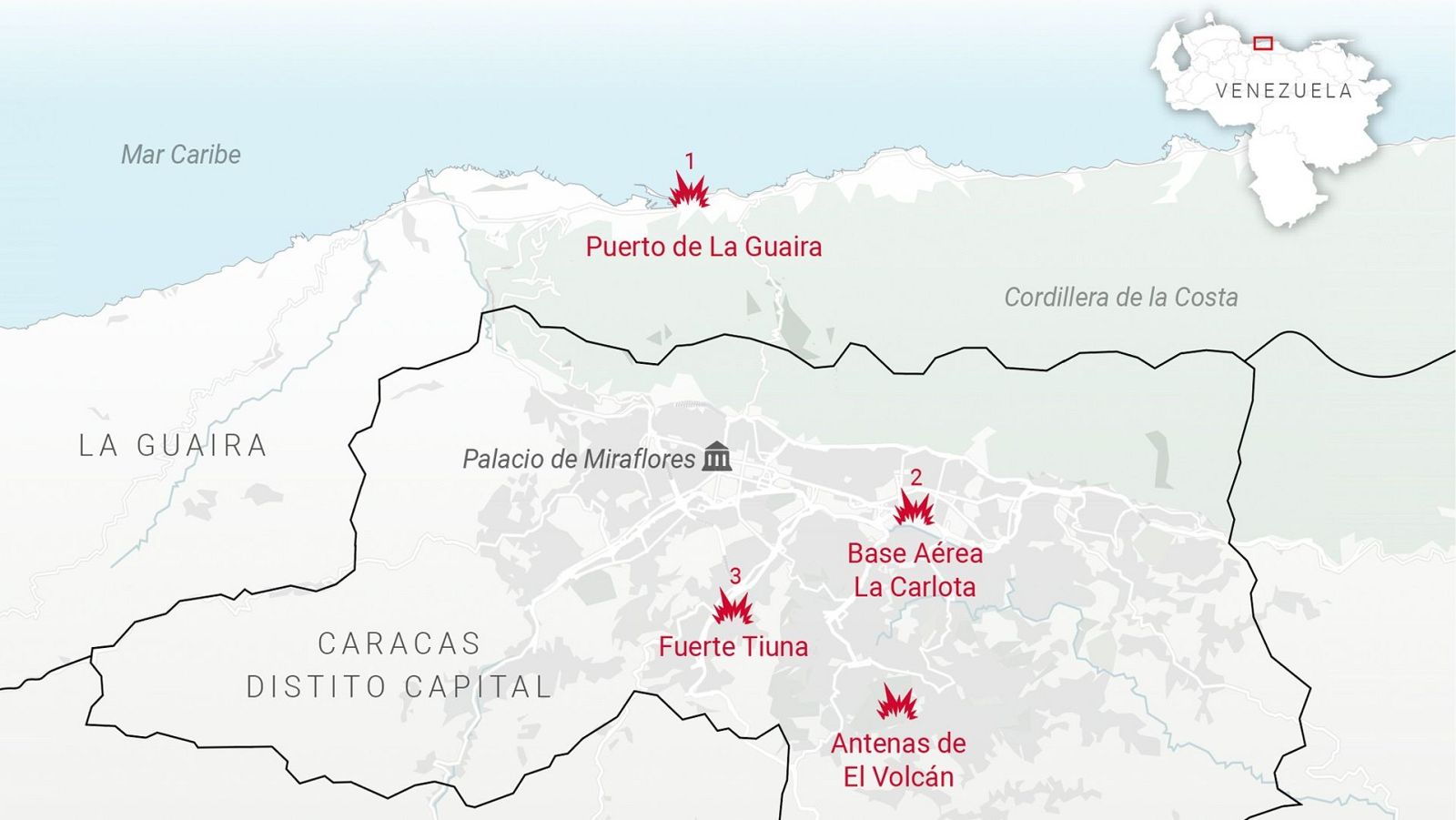
3. THE OIL FACTOR: THE GEOPOLITICAL COUNTDOWN
Trump's statements on Venezuelan oil offer the fundamental interpretative key:
"We're going to make our big American oil companies [...] invest billions of dollars, repair the oil infrastructure [...] and start generating profits"
Economic contextualization:
- Reserves: 303.22 billion barrels (17% worldwide)
- Current production: <500,000 barrels/day (vs. 3 million in 1998)
- Investment required: Estimated $200-250 billion to recover capacity
Experts consulted point out that this operation coincides with:
- Renegotiation of the U.S.-China oil agreement U.S.-Saudi Arabia
- Inflationary pressures due to energy prices
- Strategy for relocating critical chains outside the Middle East
4. UNANSWERED QUESTIONS
To. On international legality
- Which article of the OAS or UN Charter does the United States invoke?
- Was there authorization from the Security Council?
- How is the announced U.S. "guardianship" articulated?
B. On the situation in Venezuela
- Casualty figures: Only contradictory statements (Venezuelan Vice Presidency vs. Pentagon)
- Reaction of the FANB: Organized Resistance or Institutional Collapse?
- Interim government: Delcy Rodríguez affirms constitutional continuity from undisclosed location
C. The judicial process
- Southern Judicial District of New York: History in Transnational Drug Trafficking Cases
- Precedents cited: Noriega (Panama) and J.O. Hernández (Honduras)
- Procedural Questions: Capture in Foreign Territory Without Extradition
5. INTERNATIONAL REACTIONS: A DIVIDED CONTINENT
Immediate support:
- Lima Group: Colombia, Brazil, Chile issued coordinated communiqués
- Pacific Alliance: Support for "democratic restoration"
Convictions and reservations:
- Mexico: "It flagrantly violates sovereignty and international law"
- Argentina: Urgent call by CELAC and UNASUR
- CARICOM: Internal Division, 7 Countries Reject Unilateral Action
Global players:
- China: "Serious precedent of hegemonism"
- Russia: Urgent meeting of the Security Council
- European Union: Ambiguous communiqué, emphasizes "need for stability"
6. PROJECTED SCENARIOS
Scenario 1: Consolidation of control (40% probability)
- Establishment of pro-U.S. interim government
- Deployment of "stabilization" troops
- Fast start of oil contracts with ExxonMobil, Chevron
Scenario 2: Resistance and protracted conflict (35%)
- Formation of military/paramilitary resistance fronts
- Regional destabilization campaign
- Intervention of external actors (Russia, Iran via proxies)
Scenario 3: Institutional collapse and humanitarian crisis (25%)
- Power vacuum at the state and local level
- Massive migratory wave (potential +3 million in 6 months)
- Internationalization of the conflict via the United Nations
Nature reveals the most important scientific discoveries of 2025
From the discovery of a new layer of the immune system to ecosystems in the most extreme ocean depths
The prestigious scientific journal Nature has just published its annual list of the 10 people and discoveries that marked the year 2025, consolidating an extraordinary period for global research. Among the standout findings are revolutionary advances in immunology, ocean exploration, biotechnology, and personalized medicine that promise to transform our understanding of the natural world and the therapeutic capabilities of modern science.
A hidden arsenal in our cells
The most shocking discovery of the year came from systems biologist Yifat Merbl and her team at the Weizmann Institute of Science in Israel. While researching proteasomes, cellular structures known primarily for their protein recycling function, Merbl identified a completely unknown ability of our immune system.
Proteasomes, which make up to two percent of a cell's protein content and degrade seventy percent of cellular proteins, turned out to have a secret mode of operation. When they detect a bacterial infection, these tiny structures change their molecular configuration and begin to produce antimicrobial peptides capable of destroying bacteria by piercing their outer membranes.
"This is really exciting because we didn't know this was happening in cells," Professor Merbl told the BBC. "We discovered a new immunity mechanism that allows us to have a defense against bacterial infections. It's happening all over our body in every cell and generates a new class of potential natural antibiotics."
The finding, published in the journal Nature in March 2025, revealed around a thousand peptide fragments with antimicrobial sequences, all of which resulted from the degradation of ordinary and unspecialized proteins. Most surprisingly, these peptides come from cellular waste machinery, which led the team to christen their research method "container diving" or "dumpster diving" in scientific terms.
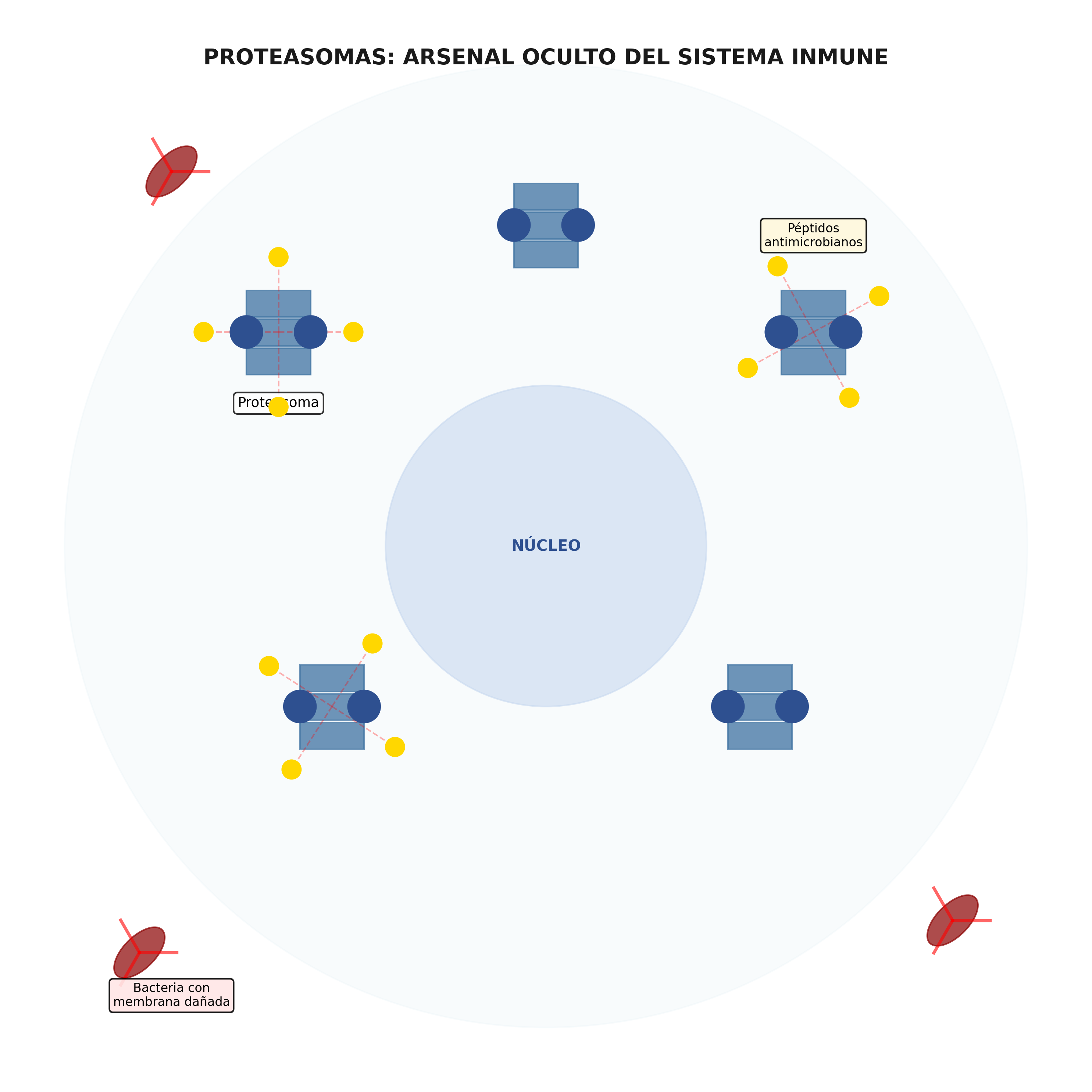
Implications for the Antibiotic Crisis
This discovery comes at a critical time. Bacterial resistance to antibiotics represents one of the greatest threats to global public health. Experiments by Merbl's team showed that when proteasomes are turned off in laboratory cells, they become significantly more vulnerable to infection by bacteria such as Salmonella.
Professor Daniel Davis, director of biological sciences and immunologist at Imperial College London, called the findings extremely striking, noting that they fundamentally change our understanding of how the body fights infections. However, he cautioned that turning this discovery into a new source of clinical antibiotics still requires years of additional research.
Dr Lindsey Edwards, an expert in microbiology at King's College London, stressed that this mechanism could be especially useful in immunocompromised patients, who are more vulnerable to severe infections and have limited therapeutic options.
Life in the Abyss: The Deepest Ecosystem on the Planet
While Merbl explored the microscopic depths of our cells, Chinese geochemist Mengran Du descended into the most extreme depths of the Pacific Ocean. With just 30 minutes left on his underwater mission aboard the submersible Fendouzhe, Du decided to explore a final stretch of the Kuril-Kamchatka Trench between Russia and Alaska.
What he found redefined the known limits of life on Earth. At depths of up to 9,533 meters below the surface, nearly 25 percent deeper than any previous record, Du and his team at the China Institute of Deep-Sea Science and Technology documented entire communities of tube worms, clams, and mollusks thriving in conditions that seemed impossible for complex life.
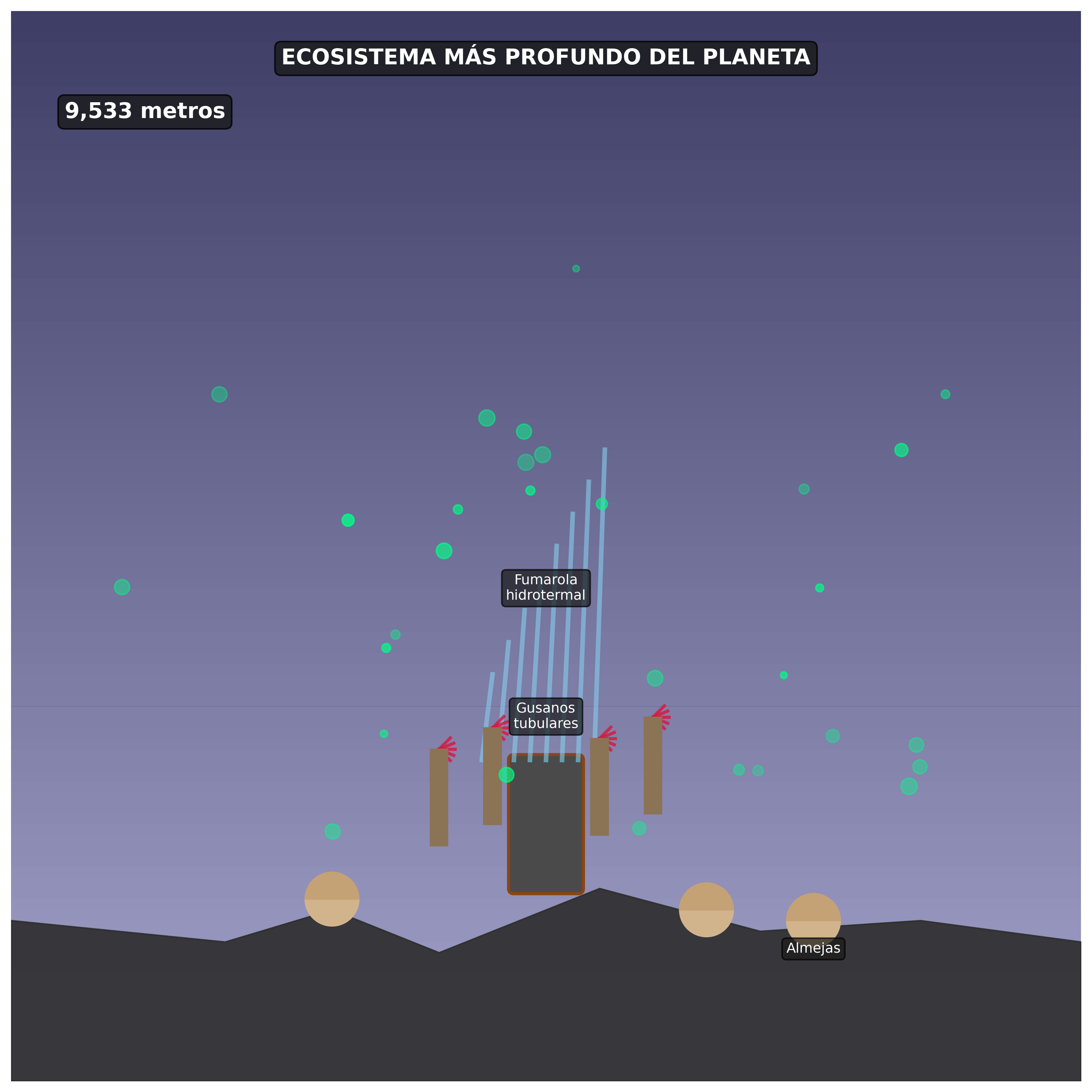
Chemical oases in absolute darkness
These creatures don't rely on photosynthesis, but on chemosynthesis, a process by which symbiotic bacteria living inside them convert chemical compounds such as methane and hydrogen sulfide into usable energy. The discovery, published in Nature in July 2025, revealed a roughly 2,500-kilometer corridor of chemosynthetic ecosystems in the hadal zone of the northwest Pacific.
"Although we see the hadal trench as a very extreme environment, the most inhospitable environment, these organisms can happily live there," explained Du, who was recognized as one of the key figures in science of 2025 by Nature.
The sediment analysis revealed surprisingly high concentrations of methane, an unexpected finding that led the team to formulate a new hypothesis: microbes in these ecosystems convert organic matter in sediments into carbon dioxide and then methane, a process scientists didn't know occurred at such depths.
Implications for the global carbon cycle
This discovery has ramifications that go far beyond marine biology. The hadal trenches, as it is now understood, act not only as methane reservoirs but as active carbon recycling centers. Recent studies suggest that sediments in these areas can sequester up to 70 times more carbon than other regions of the seafloor.
Julie Huber, a deep-sea microbiologist at the Woods Hole Oceanographic Institution who was not involved in the research, expressed amazement at the extent and diversity of the communities discovered. The finding suggests that similar ecosystems could exist in other hadal trenches around the world, dramatically expanding our understanding of where and how life can thrive in extreme conditions.
Other outstanding scientific milestones
The Nature 2025 list also recognized other significant advances that are shaping the future of science and medicine.
Personalized medicine with CRISPR
The case of KJ Muldoon, a child born in 2024 with CPS1 deficiency, an ultra-rare genetic disease that prevents protein processing and accumulates ammonia in a lethal way, marked an unprecedented milestone. A team of doctors and scientists from Philadelphia and Pennsylvania developed a completely customized CRISPR gene-editing therapy in just six months, designed to correct a single error in your DNA.
This treatment represents the first case of fully personalized gene therapy for an individual mutation, opening the door to a new era of precision medicine where treatments can be designed specifically for each patient's unique genetic profile.
Fighting dengue with bacteria
Brazilian Luciano Moreira developed an innovative method to combat dengue by releasing Aedes aegypti mosquitoes infected with the Wolbachia bacterium, which blocks the transmission of dengue, Zika and chikungunya viruses. This method, initially experimental, has been adopted as a national measure in Brazil, marking one of the most ambitious efforts to control vector-borne diseases.
The Vera C. Rubin Observatory
Nature also recognized the first images captured by the Vera C. Rubin Observatory in Chile, one of the largest and most advanced telescopes in the world. This instrument promises to revolutionize our understanding of the universe by mapping the entire visible sky of the Southern Hemisphere every few nights, making it possible to detect transient astronomical objects and study dark matter in unprecedented detail.
A year of scientific transformation
The discoveries of 2025 share a common thread: science's ability to reveal the unseen, whether it's digging through cellular junk to find new immune defenses or descending into the most inhospitable ocean depths to discover thriving ecosystems.
These findings not only push the frontiers of human knowledge, but also offer tangible hope in the face of some of the most pressing challenges of our time: bacterial resistance, climate change, and rare genetic diseases.
As the year draws to a close, the scientific community looks optimistically to 2026, aware that each discovery opens up new questions and possibilities. As Professor Merbl pointed out about their immunological finding, the team believes that it has only scratched the surface of this molecular universe. The same could be said of Du's hadal ecosystems and the countless mysteries that still await deep within our planet and our own cells.
###
Sources: Nature, BBC, CNN, El Universal, Weizmann Institute of Sciences, Chinese Academy of Sciences